From: http://www.deccanchronicle.com/channels/sci-tech/energy/tap-solar-power-space-apj-abdul-kalam-406
Tap solar power from space: A.P.J. Abdul Kalam
January 10, 2012 DC chennai
To answer the energy crisis in the world former President Dr A.P.J. Abdul Kalam has suggested that solar energy can be harnessed by establishing space stations in outer space in order to tap solar power round the clock.
Addressing scientists and faculty at Anna University on Monday, Dr Kalam said that the sun radiates about 10 trillion times the energy which humans consume across the world today.
If we were able to extract even a small portion of this energy from the sun, it would be sufficient to secure the energy demands of our future.
“Space based solar power has many advantages over traditional terrestrial based solar plants. First, the level of solar irradiance is about 1.4 times in extraterrestrial level than at the surface of the earth.
Second, in case of surface based solar power plants the panels can collect solar power for about 6 to 8 hours a day, whereas, in the case of space based power plant, the collection time is full 24 hours”, he said.
Pointing out that space based solar power plants do not get affected by weather, which might bring down the efficiency in case of terrestrial power plant, the former President said that thus space based solar power plant would be far more effective in their efficiency and power generation than the land based systems.
“There are three major focus areas in the space based solar power plant. First component is the space based solar power plant.
Second, is the earth based collection system and the third important aspect is the medium of transmission from space to earth”, he added.
Dr Kalam suggested that the energy should be transmitted from space back to earth – either through microwave or any other technology like laser. Careful research of the impact and safety concerns would have to be conducted.
Showing posts with label APJ Kalam. Show all posts
Showing posts with label APJ Kalam. Show all posts
18 February 2012

02 April 2011
Space Based Solar Power: Time to Put it on the New US-India S&T Endowment Fund
from: http://www.orfonline.org/cms/sites/orfonline/modules/analysis/AnalysisDetail.html?cmaid=22177&mmacmaid=22178
| Space Based Solar Power: Time to Put it on the New US-India S&T Endowment Fund? | |
| Dr. Rajeswari Pillai Rajagopalan 02 April 2011  With the earthquake and the subsequent tsunami that hit Japan on March 11, isn’t it time for India and the US to make serious commitments to Space-Based Solar Power (SBSP)? Japanese crisis has triggered worldwide re-thinking on the feasibility of pursuing nuclear energy to meet growing global energy demands. This has kick-started a debate also in India not only on the safety of nuclear plants but also on other energy options. It is time that India and the United States and the countries around the world looked at an often-overlooked option: SBSP. With the earthquake and the subsequent tsunami that hit Japan on March 11, isn’t it time for India and the US to make serious commitments to Space-Based Solar Power (SBSP)? Japanese crisis has triggered worldwide re-thinking on the feasibility of pursuing nuclear energy to meet growing global energy demands. This has kick-started a debate also in India not only on the safety of nuclear plants but also on other energy options. It is time that India and the United States and the countries around the world looked at an often-overlooked option: SBSP.The idea of harnessing SBSP as an option originated in the United States some 40 years ago. But it has not been pursued with vigour for a variety of reasons, including possibly the influence of nuclear lobbyists. In simple terms, SBSP is described thus by Lt. Col. Peter Garretson of the US Air Force: "In this concept, very large satellites, the largest ever constructed, made up of kilometers of solar cells, would collect the Sun’s energy where there is no light, and convert it to radio-waves to be beamed to special receiving antenna farms on the ground (called rectennas) about the size of a small airport. The energy is sent in the form of a low energy beam at about 1/6th the intensity of normal sunlight that falls on earth. But because it is a low-energy, non-ionizing wavelength, it is not as dangerous as sunlight with its high energy ultraviolet rays. At the rectenna, the energy is reconverted and sent via the existing electrical grid. Such satellites would necessitate a fleet of re-useable space planes, and as a consequence of economies of scale, reduce the cost of space access a hundred fold, enabling many other applications.2 It is estimated that one kilometre-wide band of geo-synchronous earth bit can produce solar flux to match as much as the total amount of energy produced from all the different recoverable oil reserves on Earth. The idea was promoted by none other than Dr. APJ Abdul Kalam first at the Aeronautical Society of India (AeSI) and later again at a press conference in Washington DC last year. The initiative is now titled as the Kalam-NSS (National Space Society) Energy Initiative. The Kalam-NSS initiative is an India-US partnership taken up by individuals with long-term expertise in the space realm. Some of the key people involved are, in addition to Dr. Kalam, Mark Hopkins, CEO of the US-based National Space Society and John Mankins, President of the Space Power Association and a veteran of NASA. On the Indian side, there seems to be some official involvement due to the involvement of Dr. T.K. Alex, who is the Director of the Indian Space Research Organisation (ISRO) Satellite Centre, Bangalore and leader of the Chandrayan-I project. Speaking in New Delhi in November last year, Dr. Kalam said that "by 2050, even if we use every available energy resource we have, clean and dirty, conventional and alternative, solar, wind, geothermal, nuclear, coal, oil, and gas, the world will fall short of the energy we need by 66%. There is an answer. An answer for both the developed and developing countries. This is a solar energy source that is close to infinite, an energy source that produces no carbon emissions, an energy source that can reach the most distant villages of the world, and an energy source that can turn countries into net energy exporter."3 According to the International Energy Agency (IEA), the worldwide demand for primary energy increases by 55 per cent between 2005 and 2030 - 1.8 per cent hike per year on average; and for India, the demand is expected to more than double by 2030, growing at 3.6 per cent rate per year.4 With energy demand growing rapidly, the SBSP option offers huge opportunities. Such an option will also be reportedly a cleaner energy option. This option would also significantly augment India’s capabilities in the space domain, which will have far-reaching positive spin-offs in the ever-changing security environment in Asia. This will bring the much-desired focus on the question of technology transfer between India and the US, Japan and Israel. India has looked at this option for quite sometime. In 1987, the first bit of work was undertaken looking at advanced space transportation system design concepts for cost-effective space solar power. Recently, ISRO is reported to have done some exercise looking at the feasibility of this option and examined three specific configurations. Thereafter, ISRO is believed to have welcomed an International Preliminary Feasibility Study.Unlike terrestrial solar and wind power plants, SBSP is available throughout the year, in huge quantities. It can also reportedly work irrespective of conditions that are a problem for other alternative energy sources such as cloud cover, availability of sunlight, or wind speed. What has prevented the SBSP from becoming a real option? Is it the enormous cost involved in developing the option or is it an option that never got the popular attention due to the multiplicity of departments involved? Proponents argue that the cost of SBSP should not be compared to the direct costs involved. The cost-benefit analysis needs to be done on a different scale, including the direct and indirect cost of global warming and climate change. Otherwise, the costs of developing this technology may seem exorbitant. What are the options to meet this cost? Are the Indian and American governments and private sectors willing to make significant investments on the R&D of this technology? The US-India Agreement to establish an S&T Board and an Endowment to carry out research (July 20, 2009) appears to be an ideal basis for new research and development on SBSP. SBSP seems like an ideal candidate because this fund seeks to finance projects on a broad spectrum of issues of mutual benefit such as biotechnology, health and infectious diseases, advanced materials and nanotechnology science, clean energy technologies, climate science, basic space and atmospheric and earth science among others. The US side of funding for the Endowment is reported to come from the US S&T "Rupee Funds" established in the 1980s to encourage and fund bilateral S&T projects.5 However, for the SBSP per se, there appears to be interest among the private sector companies like Boeing, Lockheed Martin, and Northrop Grumman and on the Indian side, Tatas have shown interest in exploring this option. While this can potentially be an excellent case for public-private partnership, the initiative has to come from the government. India’s foray into space and its space policies have had strong civilian and developmental roots and accordingly the government needs to place the SBSP within its overall national space policy. India’s decision to pursue SBSP will have multiple impact -clean energy, clean environment, advancement in the space arena with technology transfer as a given between India, US and Japan. 1Dr. Rajeswari Pillai Rajagopalan is Senior Fellow at the Institute of Security Studies (ISS), Observer Research Foundation, New Delhi. Her areas of research include US foreign and security policy, military strategies of major Asian powers including China, US, Japan and Russia, space and nuclear security. She can be reached atrpr@orfonline.org; rajeswarirajagopalan@gmail.com. 2Peter A Garretson, "Power the Final Frontier: Could Satellites in Orbit be a Source of Energy for the Future? It’s Possible," Satkal Times, May 22, 2009. For a detailed study, see Peter A Garretson, "Sky’s No Limit: Space Based Solar Power, the Next Major Step in the Indo-US Strategic Partnership?," IDSA Occasional Paper No. 9, (Institute for Defence Studies and Analyses, New Delhi, August 2010), p. 17. 3Announcement of the Kalam-NSS Energy Initiative, The NSS Conference Announcement, November 05, 2010, available at http://blog.nss.org/?cat=5. 4International Energy Agency, World Energy Outlook 2007: China and India Insights, International Energy Agency, Paris, 2007, p. 42 and 46. 5Press Information Bureau, "US-India to Establish a Bi-National Science and Technology Endowment Fund and Joint Commission," India PR Wire, March 3, 2006. |
14 November 2010
Press picks up NSS-Kalam Initiative
Now the President Obama has left, and provided an impressive speech to parliament and the two countries produced an affirming Joint Statement:
The Obama administration is definitely on the right track with India, going all the right vectors on Space, Defense, Climate Change, Nuclear and Renewable energy, and it is unfortunate the administration was not bold enough to tie it all together and include the truly visionary concept of Space-Based Solar Power. Perhaps some smart individual will put it on the 2011 Civil Space Joint Working Group.
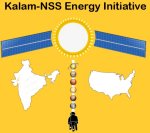
The news of the Kalam-NSS initiative is getting out, appearing online in a number of important places:
The Wall Street Journal: http://blogs.wsj.com/indiarealtime/2010/11/08/india-digest-india-america-join-hands-to-harness-solar-power/
Times of India: http://timesofindia.indiatimes.com/india/India-America-join-hands-to-harness-solar-power/articleshow/6886049.cms
MSNBC: http://www.msnbc.msn.com/id/40092675/
Yahoo News: http://news.yahoo.com/s/space/20101109/sc_space/undernewplansatellitestobeamsolarpowerdownfromspace
Kurzweil AI: http://www.kurzweilai.net/former-president-of-india-wants-to-beam-energy-from-space
Aviation Week: http://www.aviationweek.com/aw/generic/story.jsp?id=news/asd/2010/11/05/04.xml&channel=space
NASA Watch/SpaceRef: http://www.spaceref.com/calendar/calendar.html?pid=6202
Parabolic Arc: http://www.parabolicarc.com/2010/11/04/kalamnss-initiative-aimed-producing-cheap-clean-power-space/
Deccan Herald: http://www.deccanherald.com/content/109675/kalam-nss-initiative-tap-solar.html
Renewable Power News: http://www.renewablepowernews.com/archives/1945
The Space Review: http://www.thespacereview.com/article/1721/1
Space Politics: http://www.spacepolitics.com/2010/11/07/us-and-india-in-space-and-space-solar-power/
Ecopoliticology: http://ecopolitology.org/2010/11/10/us-india-launch-space-based-solar-energy-initiative/
Energy Matters: http://www.energymatters.com.au/index.php?main_page=news_article&article_id=1163
Third Age: http://www.thirdage.com/news/india-and-us-harvest-solar-power-space_11-7-2010
The Center for New American Security: http://www.cnas.org/blogs/naturalsecurity/2010/11/us-india-cooperation-space-next-frontier.html
An important commentary comes from one of India's space experts, Ajey Lele at IDSA:
From: http://www.idsa.in/idsacomments/KalamNSSIndianAmericanEnergyInitiative_alele_091110
Kalam-NSS Indian-American Energy Initiative
Ajey Lele
November 9, 2010
During his maiden visit to India, President Barack Obama has cleared the air on the issue of ‘outsourcing of jobs to Indians’. He also announced that various deals with India worth US$ 10 billion are likely to generate about 50,000 jobs in the US in the coming few years, giving indications that India is actually not a job snatcher but a job creator! While the tempo of the Obama visit has been raised in India by highlighting various aspects of Indo-US relations, one silent revolution which is expected to generate many jobs in both countries has almost gone unnoticed. On 4 November 2010, in a press conference at Washington D.C., details of the ‘Kalam-NSS Indian-American Energy Initiative’ – a joint US-Indian endeavour intended to build clean space-based solar power satellites – were announced.
Interestingly, this unique initiative is not an initiative between the two countries, nor it is a commercial venture. It also does not follow a public-private partnership model. It is a plan formulated by a former head of state and a US-based non-profit organization – India's former President Dr. A.P.J. Kalam and the US National Space Society (NSS). This initiative is important not only because it is expected to offer alternative energy solutions, but the technology promises a cheap and clean energy source. Particularly, with Mr. Obama announcing the end of the technology denial regime against Indian entities such as DRDO and ISRO, it is expected that this endeavour would progress without any ‘administrative’ glitches.
The Kalam-NSS Indian-American Energy Initiative is being conceptualized by individuals with vast experience in the field of space technologies as well as policy planning. Dr. Kalam is a rocket scientist of repute and has vast experience in developing various major projects for the Indian state. The co-principal investor from the United States, Mr. John Mankins, is president of the Space Power Association and a former exploration chief technologist at NASA. In this project there is no direct involvement of NASA. However, there is some support visible from the Indian Space Research Organization (ISRO). The co-principal investigator is Mr. T.K. Alex who is currently the Director of ISRO’s Satellite Centre and was the leader of India’s first moon mission, the Chandrayan-1.
According to Dr. Kalam it could take around 15 years for the completion of this project. India with its proven expertise in launching satellites could help to bring down the cost of satellites. It may be premature to talk with certitude about the cost effectiveness of this project. However, the group is convinced that space solar power would be affordable in the long run. It has been claimed that the cost of energy could be 10 cents per kilowatt hour (approximately Rs. 4.30). Electricity generated from coal, believed to be the cheapest form of energy, costs around Rs 3.30 per kilowatt hour.
Global electricity demand is expected to increase by 87 per cent around 2035. It is believed that by 2050 the world may not be able to fulfil overall energy requirements in spite of using every available energy resource. Proponents of this technology and the initiative like Mr. Mark Hopkins, the CEO of the National Space Society, view this as a “game-changing technology that addresses energy security, sustainable development, climate change, and multinational cooperation.” The concept of Space Based Solar Power (SBSP) or Space Solar Power (SSP) is a four decade old concept. Since the early 1970s scientists have been working on this concept with varying degrees of success. Lack of finding and political will is the main reason for inadequate development of this technology, which involves the collection of solar power from space and its use on earth. For this purpose the energy would be trapped in space with the help of satellites and would be subsequently transferred to earth. Catching energy in space is important to reduce the losses suffered in the process of its transfer to earth. For this purpose the space system converts sunlight to microwaves outside the earth’s atmosphere.
To decide the basic roadmap for this work, on May 18-22, 2011 a bilateral conference is scheduled to be held at the Von Braun Center in Huntsville, Alabama where top scientists from both countries are expected to debate this issue in detail. It is expected that the first phase of this initiative could last for one year during which a preliminary pre-feasibility study would be carried out. The second phase which could last for more than half a decade would involve a range of targeted technology and engineering demonstrations on ground. The penultimate state is expected to deliver the pilot project and the last stage involves completion and implementation of the actual project where the common man as well industry start using the SSP. The details of this project are available at the web link http://www.nss.org/settlement/ssp/library/KALAM-NSS-Initiative.pdf.
Countries like Japan have already taken a lead in this field. They have identified both near term and long term objectives for developing the SSP Programme. It is expected that they may succeeded in developing an operational system within the next five or more years. It is important for the US and India to engage Japan in this field.
But developing mega projects like the SSP are mostly viewed with mistrust by many. It is felt that successful completion of such ‘ostentatious’ ideas is not possible and more importantly such projects are huge money-spinners. In the past various inventions/ideas have been held back because of lack of public and political support. However, the energy needs of 21st century demand scrutiny of every possible option and space based solar power offers one such.
See also discussion here at Defence Forum of India:
http://www.defenceforum.in/forum/showthread.php?t=14397&page=1
Now Obama was expected to
http://www.energy-daily.com/reports/Obama_to_launch_clean_energy_initiative_in_India_999.html
The United States and India will announce during Obama's trip the creation of a center for joint cooperation on developing clean energy, including solar power and biofuels, according to two people familiar with the plan.
Excerpts from: http://www.thespacereview.com/article/1721/1
Mankins said the International Academy of Astronautics (IAA) is completing a study on SBSP, due out next spring. That study is looking at three SBSP concepts with the idea of not transmitting power to a single fixed point on the Earth, as was planned in the original 1970s concepts, but instead be able to transmit to any number of locations “in order to satisfy optimum market conditions.”
The finding of the study group—still undergoing peer review, Mankins said—is that with a new technology roadmap a pilot SBSP system could be relatively affordable. “Within 10 to 15 years, a pilot plant, delivering megawatts of power, could in fact be realizable within a finite amount of budget,” he said, with “finite” meaning $5–10 billion. “It’s not trivial—it’s a big effort—but it’s not an impossible amount of money.”
“A James Webb Space Telescope-class investment by the international community, both industry and space agencies, could in fact realize a subscale but operationally scalable multi-megawatt solar power satellite demo within 7 to 15 years,” he concluded.
For far less it may be possible to demonstrate one of the key technologies of SBSP, transmitting power from space to the Earth. Asked how much it would cost to fly a satellite that could beam a token amount of power—enough to perhaps power a single light bulb—Mankins said that a “quick and dirty demo” using off-the-shelf technology could cost $1–10 million. A more robust demonstration using technologies on the path towards larger SBSP systems would cost somewhat more: $20–50 million.
However, just as technologies have advanced during the last three decades, so have the capabilities—and energy needs—of other nations, opening up opportunities for cooperation not envisioned three decades ago.
One example formally announced at a Washington, DC, press conference on Thursday by the National Space Society is the Kalam-NSS Energy Initiative. The project is a joint venture that plans to bring together American and Indian experts to discuss technologies associated with SBSP at a bilateral meeting planned for next May in Huntsville, Alabama, in conjunction with the International Space Development Conference, the annual conference of the NSS.
What gives this effort added prominence is one of the Indian supporters of the effort: Dr. A.P.J. Abdul Kalam, the former president of India. Kalam worked on missile and space programs in India before becoming president in 2002, earning the nickname “Missile Man of India”. He promoted India’s space efforts during his five-year tenure as president and is now lending his name and interest to this new effort.
“I have been proposing that large missions, like bringing space solar power to the Earth, would need the combined efforts of nations,” Kalam said, speaking by phone from India. His interest in SBSP, he said, came from a need to meet India’s growing energy requirements while moving away from fossil fuels. “We need to graduate from fossil fuels to renewable energy sources.”
While the idea of cooperation between the two countries on space solar power has been brought up in the past (see “Should India and the US cooperate on space solar power?”, The Space Review, June 8, 2009), the concept was discussed in detail more recently in an August 2010 white paper by Peter Garretson, an Air Force lieutenant colonel who had a fellowship at India’s Institute for Defense Studies and Analyses. In the paper, he outlined the concept of solar power from space and how it might serve to advance the strategic partnership between the United States and India.
In the paper, Garretson calls for a three-stage joint effort for development of an SBSP system, after an initial (“stage 0”) creation of a bilateral framework: a technology development study, development of a demonstration system, and then full-fledged production. While the final stage would cost tens of billions of dollars, Garretson wrote that the technology study stage could be done for only $10–30 million over about five years.
Why should the two countries cooperate on SBSP, though? At Thursday’s press conference, NSS CEO Mark Hopkins noted that the two countries have “so much in common”, ranging from a shared colonial history to strong public interest in space. Both also have growing energy requirements, especially in India as that populous nation modernizes, and SBSP could meet those needs and more. “India and the United States can become major net exporters of energy,” he said.
The Obama administration is definitely on the right track with India, going all the right vectors on Space, Defense, Climate Change, Nuclear and Renewable energy, and it is unfortunate the administration was not bold enough to tie it all together and include the truly visionary concept of Space-Based Solar Power. Perhaps some smart individual will put it on the 2011 Civil Space Joint Working Group.
The news of the Kalam-NSS initiative is getting out, appearing online in a number of important places:
The Wall Street Journal: http://blogs.wsj.com/indiarealtime/2010/11/08/india-digest-india-america-join-hands-to-harness-solar-power/
Times of India: http://timesofindia.indiatimes.com/india/India-America-join-hands-to-harness-solar-power/articleshow/6886049.cms
MSNBC: http://www.msnbc.msn.com/id/40092675/
Yahoo News: http://news.yahoo.com/s/space/20101109/sc_space/undernewplansatellitestobeamsolarpowerdownfromspace
Kurzweil AI: http://www.kurzweilai.net/former-president-of-india-wants-to-beam-energy-from-space
Aviation Week: http://www.aviationweek.com/aw/generic/story.jsp?id=news/asd/2010/11/05/04.xml&channel=space
NASA Watch/SpaceRef: http://www.spaceref.com/calendar/calendar.html?pid=6202
Parabolic Arc: http://www.parabolicarc.com/2010/11/04/kalamnss-initiative-aimed-producing-cheap-clean-power-space/
Deccan Herald: http://www.deccanherald.com/content/109675/kalam-nss-initiative-tap-solar.html
Renewable Power News: http://www.renewablepowernews.com/archives/1945
The Space Review: http://www.thespacereview.com/article/1721/1
Space Politics: http://www.spacepolitics.com/2010/11/07/us-and-india-in-space-and-space-solar-power/
Ecopoliticology: http://ecopolitology.org/2010/11/10/us-india-launch-space-based-solar-energy-initiative/
Energy Matters: http://www.energymatters.com.au/index.php?main_page=news_article&article_id=1163
Third Age: http://www.thirdage.com/news/india-and-us-harvest-solar-power-space_11-7-2010
The Center for New American Security: http://www.cnas.org/blogs/naturalsecurity/2010/11/us-india-cooperation-space-next-frontier.html
An important commentary comes from one of India's space experts, Ajey Lele at IDSA:
From: http://www.idsa.in/idsacomments/KalamNSSIndianAmericanEnergyInitiative_alele_091110
Kalam-NSS Indian-American Energy Initiative
Ajey Lele
November 9, 2010
During his maiden visit to India, President Barack Obama has cleared the air on the issue of ‘outsourcing of jobs to Indians’. He also announced that various deals with India worth US$ 10 billion are likely to generate about 50,000 jobs in the US in the coming few years, giving indications that India is actually not a job snatcher but a job creator! While the tempo of the Obama visit has been raised in India by highlighting various aspects of Indo-US relations, one silent revolution which is expected to generate many jobs in both countries has almost gone unnoticed. On 4 November 2010, in a press conference at Washington D.C., details of the ‘Kalam-NSS Indian-American Energy Initiative’ – a joint US-Indian endeavour intended to build clean space-based solar power satellites – were announced.
Interestingly, this unique initiative is not an initiative between the two countries, nor it is a commercial venture. It also does not follow a public-private partnership model. It is a plan formulated by a former head of state and a US-based non-profit organization – India's former President Dr. A.P.J. Kalam and the US National Space Society (NSS). This initiative is important not only because it is expected to offer alternative energy solutions, but the technology promises a cheap and clean energy source. Particularly, with Mr. Obama announcing the end of the technology denial regime against Indian entities such as DRDO and ISRO, it is expected that this endeavour would progress without any ‘administrative’ glitches.
The Kalam-NSS Indian-American Energy Initiative is being conceptualized by individuals with vast experience in the field of space technologies as well as policy planning. Dr. Kalam is a rocket scientist of repute and has vast experience in developing various major projects for the Indian state. The co-principal investor from the United States, Mr. John Mankins, is president of the Space Power Association and a former exploration chief technologist at NASA. In this project there is no direct involvement of NASA. However, there is some support visible from the Indian Space Research Organization (ISRO). The co-principal investigator is Mr. T.K. Alex who is currently the Director of ISRO’s Satellite Centre and was the leader of India’s first moon mission, the Chandrayan-1.
According to Dr. Kalam it could take around 15 years for the completion of this project. India with its proven expertise in launching satellites could help to bring down the cost of satellites. It may be premature to talk with certitude about the cost effectiveness of this project. However, the group is convinced that space solar power would be affordable in the long run. It has been claimed that the cost of energy could be 10 cents per kilowatt hour (approximately Rs. 4.30). Electricity generated from coal, believed to be the cheapest form of energy, costs around Rs 3.30 per kilowatt hour.
Global electricity demand is expected to increase by 87 per cent around 2035. It is believed that by 2050 the world may not be able to fulfil overall energy requirements in spite of using every available energy resource. Proponents of this technology and the initiative like Mr. Mark Hopkins, the CEO of the National Space Society, view this as a “game-changing technology that addresses energy security, sustainable development, climate change, and multinational cooperation.” The concept of Space Based Solar Power (SBSP) or Space Solar Power (SSP) is a four decade old concept. Since the early 1970s scientists have been working on this concept with varying degrees of success. Lack of finding and political will is the main reason for inadequate development of this technology, which involves the collection of solar power from space and its use on earth. For this purpose the energy would be trapped in space with the help of satellites and would be subsequently transferred to earth. Catching energy in space is important to reduce the losses suffered in the process of its transfer to earth. For this purpose the space system converts sunlight to microwaves outside the earth’s atmosphere.
To decide the basic roadmap for this work, on May 18-22, 2011 a bilateral conference is scheduled to be held at the Von Braun Center in Huntsville, Alabama where top scientists from both countries are expected to debate this issue in detail. It is expected that the first phase of this initiative could last for one year during which a preliminary pre-feasibility study would be carried out. The second phase which could last for more than half a decade would involve a range of targeted technology and engineering demonstrations on ground. The penultimate state is expected to deliver the pilot project and the last stage involves completion and implementation of the actual project where the common man as well industry start using the SSP. The details of this project are available at the web link http://www.nss.org/settlement/ssp/library/KALAM-NSS-Initiative.pdf.
Countries like Japan have already taken a lead in this field. They have identified both near term and long term objectives for developing the SSP Programme. It is expected that they may succeeded in developing an operational system within the next five or more years. It is important for the US and India to engage Japan in this field.
But developing mega projects like the SSP are mostly viewed with mistrust by many. It is felt that successful completion of such ‘ostentatious’ ideas is not possible and more importantly such projects are huge money-spinners. In the past various inventions/ideas have been held back because of lack of public and political support. However, the energy needs of 21st century demand scrutiny of every possible option and space based solar power offers one such.
See also discussion here at Defence Forum of India:
http://www.defenceforum.in/forum/showthread.php?t=14397&page=1
Now Obama was expected to
http://www.energy-daily.com/reports/Obama_to_launch_clean_energy_initiative_in_India_999.html
The United States and India will announce during Obama's trip the creation of a center for joint cooperation on developing clean energy, including solar power and biofuels, according to two people familiar with the plan.
Excerpts from: http://www.thespacereview.com/article/1721/1
Mankins said the International Academy of Astronautics (IAA) is completing a study on SBSP, due out next spring. That study is looking at three SBSP concepts with the idea of not transmitting power to a single fixed point on the Earth, as was planned in the original 1970s concepts, but instead be able to transmit to any number of locations “in order to satisfy optimum market conditions.”
The finding of the study group—still undergoing peer review, Mankins said—is that with a new technology roadmap a pilot SBSP system could be relatively affordable. “Within 10 to 15 years, a pilot plant, delivering megawatts of power, could in fact be realizable within a finite amount of budget,” he said, with “finite” meaning $5–10 billion. “It’s not trivial—it’s a big effort—but it’s not an impossible amount of money.”
“A James Webb Space Telescope-class investment by the international community, both industry and space agencies, could in fact realize a subscale but operationally scalable multi-megawatt solar power satellite demo within 7 to 15 years,” he concluded.
For far less it may be possible to demonstrate one of the key technologies of SBSP, transmitting power from space to the Earth. Asked how much it would cost to fly a satellite that could beam a token amount of power—enough to perhaps power a single light bulb—Mankins said that a “quick and dirty demo” using off-the-shelf technology could cost $1–10 million. A more robust demonstration using technologies on the path towards larger SBSP systems would cost somewhat more: $20–50 million.
However, just as technologies have advanced during the last three decades, so have the capabilities—and energy needs—of other nations, opening up opportunities for cooperation not envisioned three decades ago.
One example formally announced at a Washington, DC, press conference on Thursday by the National Space Society is the Kalam-NSS Energy Initiative. The project is a joint venture that plans to bring together American and Indian experts to discuss technologies associated with SBSP at a bilateral meeting planned for next May in Huntsville, Alabama, in conjunction with the International Space Development Conference, the annual conference of the NSS.
What gives this effort added prominence is one of the Indian supporters of the effort: Dr. A.P.J. Abdul Kalam, the former president of India. Kalam worked on missile and space programs in India before becoming president in 2002, earning the nickname “Missile Man of India”. He promoted India’s space efforts during his five-year tenure as president and is now lending his name and interest to this new effort.
“I have been proposing that large missions, like bringing space solar power to the Earth, would need the combined efforts of nations,” Kalam said, speaking by phone from India. His interest in SBSP, he said, came from a need to meet India’s growing energy requirements while moving away from fossil fuels. “We need to graduate from fossil fuels to renewable energy sources.”
While the idea of cooperation between the two countries on space solar power has been brought up in the past (see “Should India and the US cooperate on space solar power?”, The Space Review, June 8, 2009), the concept was discussed in detail more recently in an August 2010 white paper by Peter Garretson, an Air Force lieutenant colonel who had a fellowship at India’s Institute for Defense Studies and Analyses. In the paper, he outlined the concept of solar power from space and how it might serve to advance the strategic partnership between the United States and India.
In the paper, Garretson calls for a three-stage joint effort for development of an SBSP system, after an initial (“stage 0”) creation of a bilateral framework: a technology development study, development of a demonstration system, and then full-fledged production. While the final stage would cost tens of billions of dollars, Garretson wrote that the technology study stage could be done for only $10–30 million over about five years.
Why should the two countries cooperate on SBSP, though? At Thursday’s press conference, NSS CEO Mark Hopkins noted that the two countries have “so much in common”, ranging from a shared colonial history to strong public interest in space. Both also have growing energy requirements, especially in India as that populous nation modernizes, and SBSP could meet those needs and more. “India and the United States can become major net exporters of energy,” he said.
07 November 2010
Will Obama second Kalam-NSS Initiative while in India?
From: http://timesofindia.indiatimes.com/articleshow/6886049.cms?prtpage=1
Printed from
India, America join hands to harness solar power
Srinivas Laxman, TNN, Nov 8, 2010, 02.22am IST
MUMBAI: India and USA teamed up on a space-based energy initiative aimed at turning both countries into net energy exporters, 48 hours before US President Barack Obama landed in India.
The project is led by former president of India A P J Abdul Kalam, who was once a staunch critic of the US, and National Space Society (NSS), a non-profit US-based space organization with chapters all over the world including India. The initiative was announced on Thursday at Washington's National Press Club where Kalam and Isro Satellite Centre director T K Alex were present. Known as the Kalam-National Space Society initiative, the mission envisages harvesting solar power in space for use on earth.
Alex is the project's principal investigator from India. Kalam told the US media that a team from Isro has been formed to carry out a feasibility study for this project. He said Isro chairman K Radhakrishnan asked him to take the idea forward after a discussing the project. Referring to the Manmohan Singh-Obama summit in New Delhi on Sunday, Kalam said both were concerned leaders ''interested in energy-related issues and energy independence''. Kalam said it was a 15-year-project. The main challenge is to evolve methods to transmit solar power from space to earth and its distribution. To make it economical, the cost of launching a spacecraft, currently $20,000 a kg, has to be slashed to $2,000 a kg.
Read more: India, America join hands to harness solar power - The Times of India http://timesofindia.indiatimes.com/articleshow/6886049.cms?prtpage=1#ixzz14emtVo63
From: http://www.energymatters.com.au/index.php?main_page=news_article&article_id=1163
America and India, two nations trying to wean themselves off an unhealthy reliance on fossil fuels, have agreed to work towards a joint space program that would establish solar energy harvesting satellites in orbit around the Earth.
As US President Barack Obama visits India, his former counterpart Dr A.P.J. Kalam, eleventh president of India last week addressed the National Press Club along with the National Space Society (NSS) on the subject of space solar power.
Dr Kalam is in partnership with Dr. T.K. Alex, Director of the Indian Space Research Organization (ISRO) Satellite Centre and leader of the Chandrayan-1 project that discovered water on the moon. The project is called the Kalam-NSS Initiative.
Although the logistics involved in the production and transfer of space solar power are literally out of this world, Dr Kalam says humanity will have no choice because Earth-bound renewable energy sources will not be able to cope with demand.
"By 2050, even if we use every available energy resource we have: clean and dirty, conventional and alternative, solar, wind, geothermal, nuclear, coal, oil, and gas, the world will fall short of the energy we need."
Kalam believes that utilising off-world solar power has the potential to reverse America’s half a trillion dollar a year balance of payments deficit and to generate a new generation of American jobs. It is, he argues, simply expanding on existing technology that has been in use for decades by both India and America to power satellites sent into space.
Telstar, America’s first commercial satellite, was essentially a "beachball encrusted with square medallions. Those medallions were photovoltaic panels.
From: http://www.aviationweek.com/aw/jsp_includes/articlePrint.jsp?storyID=news/asd/2010/11/05/04.xml&headLine=Indian,%20U.S.%20Experts%20Team%20On%20Space%20Solar%20Power
Indian, U.S. Experts Team On Space Solar Power
By Frank Morring, Jr.
Former Indian President A.P.J. Kalam has lent his name to a new cooperative effort by experts in the U.S. and India to advance space solar power (SSP) as a way to improve life on Earth.
Kalam, 79, is a space pioneer who served as the 11th president of India. He and his former associates at the Indian Space Research Organization (ISRO) have teamed with the Washington-based National Space Society (NSS) for an initiative aimed at accomplishing the work necessary to field a system of large satellites that would collect solar energy and beam it safely to Earth’s surface.
“A large mission like space solar power will need the combined efforts of many nations,” Kalam said Nov. 4 in a conference call from India. “I am certain that harvesting solar power in space can upgrade the living standard of the human race.”
U.S. Allies
Kalam was joined on the line by John Mankins, a former exploration chief technologist at NASA who is president of the Space Power Association, and T.K. Alex, director of the ISRO’s Satellite Center in Bengaluru. Alex, who led development of the Chandrayaan-1 lunar orbiter, will join Mankins as co-principal investigators on the Kalam-National Space Society Energy Initiative.
The group plans a bilateral meeting in Huntsville, Ala., next May to establish a course of action and organizational structure.
While NSS CEO Mark Hopkins says that meeting will be organized around Indian and U.S. participants, plans call for broadening the effort to include other nations — notably Japan, which has done advanced work in space solar power.
Kalam says the topic may be included during President Barack Obama’s upcoming summit with Indian Prime Minister Manmohan Singh, but a more likely route to the top levels of spacefaring nations will come in presentations at future G-8 and G-20 economic summits.
Ideally, different nations will contribute SSP components based on their particular skills, he says.
For India and the U.S., cooperation in technology development also can work, he adds.
Indian infrastructure
Alex says India already has a significant terrestrial solar power industry based in the country’s north. The nation also is working in multi-junction solar arrays which, while not as advanced as similar technology in the U.S., could lead to the solar-power conversion efficiency needed to make SSP practical. Similarly, Kalam cited India’s work in reusable launch vehicle technology as a way to hold down the cost of getting SSP payloads to orbit, and said that work could go faster if the U.S. and India collaborate.
Mankins cited a “10-10-10” rule for a first prototype in geostationary orbit that could be a goal for the new bilateral initiative.
Such a system would deliver 10 megawatts of power, cost less than $10 billion to build and launch, and be ready in less than 10 years. The system would consist of a large satellite to collect the Sun’s energy and convert it into microwaves, which would be beamed to an antenna on Earth that would collect the microwaves for conversion to electricity and transmission through the existing power grid.
The antenna would be as open as chicken wire, Hopkins says, which would permit farmers to grow crops under it. And the beam would be so diffuse that “you can walk through the beam, even if you’re naked, and it’s not going to hurt you.”
 A.P.J. Kalam photo: India government
From: http://www.spacepolitics.com/2010/11/07/us-and-india-in-space-and-space-solar-power/
US and India in space (and space solar power?)
November 7, 2010 at 9:52 am · Filed under Other
President Obama is currently in India, where he is expected to formally announce on Monday the removal of the Indian space agency ISRO from a US list that restricts exports of some sensitive technologies. The Entity List, as it is formally known, specifies additional requirements for items beyond what’s already required under export control regulations. Currently ISRO and four organizations within it are on the list, requiring a “case-by-case review” for any item on the Commerce Control List for export to those organizations. That restriction dates back to sanctions placed on India and Pakistan for their nuclear tests in the late 1990s.
That move isn’t unexpected: it had been anticipated for weeks in both the US and India. In a Wall Street Journal op-ed on Thursday, former deputy secretary of state Richard Armitage, writing with another former State Department official, R. Nicholas Burns, called on both the White House and Congress to “liberalize U.S. export controls that have an impact on India, including by removing the Indian Space Research Organization (the Indian equivalent to NASA) from the U.S. ‘Entity List.’” However, that appears to be the limit of space-related progress in the president’s visit: Indian media reported last week that it’s unlikely a commercial satellite launch agreement will be completed in time. Such an agreement would make it easier for US-built commercial satellites, or satellites with US-built components, to be launched on Indian vehicles.
A few people, though, are seeking much grander visions of US-Indian cooperation in space. At a press conference in Washington on Thursday, American and Indian officials announced the creation of Kalam-NSS Energy Initiative to promote the development of space-based solar power (SBSP) in the two nations. The near-term goal of the initiative is to arrange a bilateral meeting of Indian and American experts on the topic in May in Huntsville, Alabama, in conjunction with the International Space Development Conference (ISDC), the annual conference of the National Space Society (NSS).
The effort might be dismissed as a minor effort of a few people to promote what’s widely considered a fringe topic, but it does have the backing of a prominent individual on the Indian side: former president A.P.J. Abdul Kalam, who participated in Thursday’s press conference by phone from India. Kalam spoke of the need to increase energy production to meet the needs of a modernizing India, without going into details about how the two countries might cooperation in SBSP beyond holding a joint meeting. Asked if the topic might come up in the meeting between President Obama and Indian Prime Minister Singh in New Delhi, Kalam suggested that it should instead be presented at a future meeting of G8 or G20 nations.
Also unclear is what India would bring to the table in terms of its role in developing a SBSP system. Asked what unique capabilities India could offer, Kalam discussed the development of what he called a “hyperplane”, a reusable spaceplane concept, something he said India could cooperate with the US and other nations on. (Given the difficulties any nation has had in developing RLVs, and the challenges India has faced in even building a cryogenic upper stage for its GSLV expendable rocket, jumping ahead to a “hyperplane” may seem a bit of a stretch.) T.K. Alex, director of the ISRO Satellite Centre and the Indian lead of the Kalam-NSS Energy Initiative, said later at the press conference that India could also contribute in the development of high-efficiency and lightweight solar cells. NSS CEO Mark Hopkins suggested a different role for India, saying that “a combination of American technology and the ability of India to do a lot of low-cost manufacturing” could be essential to any future success of SBSP.
From: http://news.rediff.com/report/2010/nov/02/kalam-nss-initiative-to-tap-solar-power-in-space.htm
'Kalam-NSS' initiative to tap solar power in space
November 02, 2010 08:02 IST
Tags: National Space Society, Indian Space Research Organisation, Mark Hopkins, Kalam, NASA
Share
this Ask
Users Write a
Comment
Former Indian President A P J Abdul Kalam [ Images ] and US' prestigious National Space Society are all set to announce their ambitious joint initiative to tap solar power in space, when President Barack Obama [ Images ] visits the country this weekend.
"The 'Kalam-NSS' Energy Initiative is a transformative idea that can up shift the US and Indian economies by meeting the urgent global need for a scalable, carbon-neutral, green, 24-hr renewable power source," CEO of National Space Society (NSS) Mark Hopkins said.
It is a game-changing technology that addresses energy security, sustainable development, climate change, and multinational cooperation, Hopkins said.
Obama and Prime Minister Manmohan Singh [ Images ] are expected to discuss joint research and development on energy issues during the former's maiden visit to the country.
"I am convinced that harvesting solar power in space can bring India [ Images ] and United States of America together in whole new ways.
"And I am certain that harvesting solar power in space can upgrade the living standard of the human race," Kalam said.
Dr T K Alex, Director of the Indian Space Research Organisation (ISRO) and John Mankins, a 25-year NASA [ Images ] veteran, are believed to provide the details via electronic feed.
The popular former Indian president would also address a press conference at NSS via phone on November 4.
The next step in the Kalam-NSS Energy Initiative will be a NSS joint Indo-American conference on space solar power at the Von Braun Center in Huntsville, Alabama, on May 18-22 next year.
Space solar power has the potential to reverse America's half-a-trillion dollar balance of payments a year deficit and to generate a new generation of American jobs, a media release said, adding that it is a source whose basic technology is already here.
US has been harvesting solar power in space and transmitting it to earth since 1962, when 'Telstar', the first commercial satellite, went up in orbit.
Similarly India has been looking to tap solar energy in space since 1975, when its first satellite, 'Aryabhatta A', was introduced,
World electricity demand by the year 2035 is projected to increase by 87 per cent.
"By 2050, even if we use every available energy resource we have: clean and dirty, conventional and alternative, solar, wind, geothermal, nuclear, coal, oil, and gas, the world will fall short of the energy we need," Kalam said.
There is an answer… an energy source that produces no carbon emissions, an energy source that can reach to most distant villages of the world, and an energy source that can turn both countries into net energy and technology exporters, the former president added.
From: http://www.thinkindia.net.in/2010/11/india-and-the-us-to-harvest-solar-power-in-space-.html
India and the U.S. to "Harvest Solar Power in Space"
India and the U.S. have agreed to team up on a space-based energy initiative, reports The Times of India.
This comes as U.S. President Barack Obama is on an official trip to India, aimed at opening up the Indian market for U.S. business.
The Times of India says the project looks to turn both countries into net energy exporters. Named the Kalam-National Space Society initiative, it proposes to harvest solar power in space, for use on earth. Read More
Source: Third Age
From: http://www.next100.com/2010/10/partners-in-space.php
OCT 26 2010
PARTNERS IN SPACE?
Posted by: Jonathan Marshall
When President Obama visits India in a couple of weeks to help cement the two countries’ strategic and economic relationship, he should make room on the agenda for a visionary plan to create a joint space-based solar energy program.
That’s the provocative recommendation of a recent report drafted by a U.S. Air Force lieutenant colonel, and published by the Institute for Defense Studies and Analyses, a think tank based in New Delhi and funded by India’s defense ministry.
As readers of NEXT100 know, space-based solar energy is an unproven but nearly unlimited source of clean, renewable energy. Photovoltaic panels in orbit around the Earth would capture intense solar energy around the clock—with no down time for clouds or night—and then beam it down to an earth receiving station in the form of microwaves. The energy would then be converted into electrical current suitable for the power grid.
India has a strong interest in space solar power, thanks to its active space program and limited available land for terrestrial solar. The country’s former president, A. P. J. Abdul Kalam, told a group of space experts in Boston three years ago that India is developing an inexpensive reusable launch vehicle that could give "mankind the benefit of space solar-power stations in geostationary and other orbits.”
The new think-tank report maintains that a joint program aimed at establishing a commercially viable space solar industry by 2025 could be “the next major step in the Indo-US strategic partnership.” It would help “solve the linked problems of energy security, development and climate change” while giving India a constructive and peaceful direction for its rising space program.
If successful, the partnership would “position the US and Indian technical and industrial bases to enjoy a competitive edge in what is expected to be a significant and profitable market,” the report adds.
“It will also become one of the grandest and most ambitious humanitarian and environmentalist causes that will be sure to excite a generation as did the Apollo program that put a man on the moon.”
The two countries are longstanding partners when it comes to space science. The United States helped India launch its first generation of satellites in the 1970s, and India returned the favor by carrying NASA’s Moon Minerology Mapper aboard a moon-orbiting satellite last year.
A key stumbling block—aside from the Obama administration’s apparent disinterest in space solar—is India’s continuing refusal to sign the Missile Technology Control Regime, which seeks to curb the proliferation of missile technology. Unless it signs, the United States can’t share rocket technology with India.
See the press conference here:
http://www.youtube.com/watch?v=al4X8O0k0pQ
Printed from
India, America join hands to harness solar power
Srinivas Laxman, TNN, Nov 8, 2010, 02.22am IST
MUMBAI: India and USA teamed up on a space-based energy initiative aimed at turning both countries into net energy exporters, 48 hours before US President Barack Obama landed in India.
The project is led by former president of India A P J Abdul Kalam, who was once a staunch critic of the US, and National Space Society (NSS), a non-profit US-based space organization with chapters all over the world including India. The initiative was announced on Thursday at Washington's National Press Club where Kalam and Isro Satellite Centre director T K Alex were present. Known as the Kalam-National Space Society initiative, the mission envisages harvesting solar power in space for use on earth.
Alex is the project's principal investigator from India. Kalam told the US media that a team from Isro has been formed to carry out a feasibility study for this project. He said Isro chairman K Radhakrishnan asked him to take the idea forward after a discussing the project. Referring to the Manmohan Singh-Obama summit in New Delhi on Sunday, Kalam said both were concerned leaders ''interested in energy-related issues and energy independence''. Kalam said it was a 15-year-project. The main challenge is to evolve methods to transmit solar power from space to earth and its distribution. To make it economical, the cost of launching a spacecraft, currently $20,000 a kg, has to be slashed to $2,000 a kg.
Read more: India, America join hands to harness solar power - The Times of India http://timesofindia.indiatimes.com/articleshow/6886049.cms?prtpage=1#ixzz14emtVo63
From: http://www.energymatters.com.au/index.php?main_page=news_article&article_id=1163
NSS-Kalam Energy Initiative To Harvest Solar Power From Space
America and India, two nations trying to wean themselves off an unhealthy reliance on fossil fuels, have agreed to work towards a joint space program that would establish solar energy harvesting satellites in orbit around the Earth.
As US President Barack Obama visits India, his former counterpart Dr A.P.J. Kalam, eleventh president of India last week addressed the National Press Club along with the National Space Society (NSS) on the subject of space solar power.
Dr Kalam is in partnership with Dr. T.K. Alex, Director of the Indian Space Research Organization (ISRO) Satellite Centre and leader of the Chandrayan-1 project that discovered water on the moon. The project is called the Kalam-NSS Initiative.
Although the logistics involved in the production and transfer of space solar power are literally out of this world, Dr Kalam says humanity will have no choice because Earth-bound renewable energy sources will not be able to cope with demand.
"By 2050, even if we use every available energy resource we have: clean and dirty, conventional and alternative, solar, wind, geothermal, nuclear, coal, oil, and gas, the world will fall short of the energy we need."
Kalam believes that utilising off-world solar power has the potential to reverse America’s half a trillion dollar a year balance of payments deficit and to generate a new generation of American jobs. It is, he argues, simply expanding on existing technology that has been in use for decades by both India and America to power satellites sent into space.
Telstar, America’s first commercial satellite, was essentially a "beachball encrusted with square medallions. Those medallions were photovoltaic panels.
From: http://www.aviationweek.com/aw/jsp_includes/articlePrint.jsp?storyID=news/asd/2010/11/05/04.xml&headLine=Indian,%20U.S.%20Experts%20Team%20On%20Space%20Solar%20Power
Indian, U.S. Experts Team On Space Solar Power
By Frank Morring, Jr.
Former Indian President A.P.J. Kalam has lent his name to a new cooperative effort by experts in the U.S. and India to advance space solar power (SSP) as a way to improve life on Earth.
Kalam, 79, is a space pioneer who served as the 11th president of India. He and his former associates at the Indian Space Research Organization (ISRO) have teamed with the Washington-based National Space Society (NSS) for an initiative aimed at accomplishing the work necessary to field a system of large satellites that would collect solar energy and beam it safely to Earth’s surface.
“A large mission like space solar power will need the combined efforts of many nations,” Kalam said Nov. 4 in a conference call from India. “I am certain that harvesting solar power in space can upgrade the living standard of the human race.”
U.S. Allies
Kalam was joined on the line by John Mankins, a former exploration chief technologist at NASA who is president of the Space Power Association, and T.K. Alex, director of the ISRO’s Satellite Center in Bengaluru. Alex, who led development of the Chandrayaan-1 lunar orbiter, will join Mankins as co-principal investigators on the Kalam-National Space Society Energy Initiative.
The group plans a bilateral meeting in Huntsville, Ala., next May to establish a course of action and organizational structure.
While NSS CEO Mark Hopkins says that meeting will be organized around Indian and U.S. participants, plans call for broadening the effort to include other nations — notably Japan, which has done advanced work in space solar power.
Kalam says the topic may be included during President Barack Obama’s upcoming summit with Indian Prime Minister Manmohan Singh, but a more likely route to the top levels of spacefaring nations will come in presentations at future G-8 and G-20 economic summits.
Ideally, different nations will contribute SSP components based on their particular skills, he says.
For India and the U.S., cooperation in technology development also can work, he adds.
Indian infrastructure
Alex says India already has a significant terrestrial solar power industry based in the country’s north. The nation also is working in multi-junction solar arrays which, while not as advanced as similar technology in the U.S., could lead to the solar-power conversion efficiency needed to make SSP practical. Similarly, Kalam cited India’s work in reusable launch vehicle technology as a way to hold down the cost of getting SSP payloads to orbit, and said that work could go faster if the U.S. and India collaborate.
Mankins cited a “10-10-10” rule for a first prototype in geostationary orbit that could be a goal for the new bilateral initiative.
Such a system would deliver 10 megawatts of power, cost less than $10 billion to build and launch, and be ready in less than 10 years. The system would consist of a large satellite to collect the Sun’s energy and convert it into microwaves, which would be beamed to an antenna on Earth that would collect the microwaves for conversion to electricity and transmission through the existing power grid.
The antenna would be as open as chicken wire, Hopkins says, which would permit farmers to grow crops under it. And the beam would be so diffuse that “you can walk through the beam, even if you’re naked, and it’s not going to hurt you.”
From: http://www.spacepolitics.com/2010/11/07/us-and-india-in-space-and-space-solar-power/
US and India in space (and space solar power?)
November 7, 2010 at 9:52 am · Filed under Other
President Obama is currently in India, where he is expected to formally announce on Monday the removal of the Indian space agency ISRO from a US list that restricts exports of some sensitive technologies. The Entity List, as it is formally known, specifies additional requirements for items beyond what’s already required under export control regulations. Currently ISRO and four organizations within it are on the list, requiring a “case-by-case review” for any item on the Commerce Control List for export to those organizations. That restriction dates back to sanctions placed on India and Pakistan for their nuclear tests in the late 1990s.
That move isn’t unexpected: it had been anticipated for weeks in both the US and India. In a Wall Street Journal op-ed on Thursday, former deputy secretary of state Richard Armitage, writing with another former State Department official, R. Nicholas Burns, called on both the White House and Congress to “liberalize U.S. export controls that have an impact on India, including by removing the Indian Space Research Organization (the Indian equivalent to NASA) from the U.S. ‘Entity List.’” However, that appears to be the limit of space-related progress in the president’s visit: Indian media reported last week that it’s unlikely a commercial satellite launch agreement will be completed in time. Such an agreement would make it easier for US-built commercial satellites, or satellites with US-built components, to be launched on Indian vehicles.
A few people, though, are seeking much grander visions of US-Indian cooperation in space. At a press conference in Washington on Thursday, American and Indian officials announced the creation of Kalam-NSS Energy Initiative to promote the development of space-based solar power (SBSP) in the two nations. The near-term goal of the initiative is to arrange a bilateral meeting of Indian and American experts on the topic in May in Huntsville, Alabama, in conjunction with the International Space Development Conference (ISDC), the annual conference of the National Space Society (NSS).
The effort might be dismissed as a minor effort of a few people to promote what’s widely considered a fringe topic, but it does have the backing of a prominent individual on the Indian side: former president A.P.J. Abdul Kalam, who participated in Thursday’s press conference by phone from India. Kalam spoke of the need to increase energy production to meet the needs of a modernizing India, without going into details about how the two countries might cooperation in SBSP beyond holding a joint meeting. Asked if the topic might come up in the meeting between President Obama and Indian Prime Minister Singh in New Delhi, Kalam suggested that it should instead be presented at a future meeting of G8 or G20 nations.
Also unclear is what India would bring to the table in terms of its role in developing a SBSP system. Asked what unique capabilities India could offer, Kalam discussed the development of what he called a “hyperplane”, a reusable spaceplane concept, something he said India could cooperate with the US and other nations on. (Given the difficulties any nation has had in developing RLVs, and the challenges India has faced in even building a cryogenic upper stage for its GSLV expendable rocket, jumping ahead to a “hyperplane” may seem a bit of a stretch.) T.K. Alex, director of the ISRO Satellite Centre and the Indian lead of the Kalam-NSS Energy Initiative, said later at the press conference that India could also contribute in the development of high-efficiency and lightweight solar cells. NSS CEO Mark Hopkins suggested a different role for India, saying that “a combination of American technology and the ability of India to do a lot of low-cost manufacturing” could be essential to any future success of SBSP.
From: http://news.rediff.com/report/2010/nov/02/kalam-nss-initiative-to-tap-solar-power-in-space.htm
'Kalam-NSS' initiative to tap solar power in space
November 02, 2010 08:02 IST
Tags: National Space Society, Indian Space Research Organisation, Mark Hopkins, Kalam, NASA
Share
this Ask
Users Write a
Comment
Former Indian President A P J Abdul Kalam [ Images ] and US' prestigious National Space Society are all set to announce their ambitious joint initiative to tap solar power in space, when President Barack Obama [ Images ] visits the country this weekend.
"The 'Kalam-NSS' Energy Initiative is a transformative idea that can up shift the US and Indian economies by meeting the urgent global need for a scalable, carbon-neutral, green, 24-hr renewable power source," CEO of National Space Society (NSS) Mark Hopkins said.
It is a game-changing technology that addresses energy security, sustainable development, climate change, and multinational cooperation, Hopkins said.
Obama and Prime Minister Manmohan Singh [ Images ] are expected to discuss joint research and development on energy issues during the former's maiden visit to the country.
"I am convinced that harvesting solar power in space can bring India [ Images ] and United States of America together in whole new ways.
"And I am certain that harvesting solar power in space can upgrade the living standard of the human race," Kalam said.
Dr T K Alex, Director of the Indian Space Research Organisation (ISRO) and John Mankins, a 25-year NASA [ Images ] veteran, are believed to provide the details via electronic feed.
The popular former Indian president would also address a press conference at NSS via phone on November 4.
The next step in the Kalam-NSS Energy Initiative will be a NSS joint Indo-American conference on space solar power at the Von Braun Center in Huntsville, Alabama, on May 18-22 next year.
Space solar power has the potential to reverse America's half-a-trillion dollar balance of payments a year deficit and to generate a new generation of American jobs, a media release said, adding that it is a source whose basic technology is already here.
US has been harvesting solar power in space and transmitting it to earth since 1962, when 'Telstar', the first commercial satellite, went up in orbit.
Similarly India has been looking to tap solar energy in space since 1975, when its first satellite, 'Aryabhatta A', was introduced,
World electricity demand by the year 2035 is projected to increase by 87 per cent.
"By 2050, even if we use every available energy resource we have: clean and dirty, conventional and alternative, solar, wind, geothermal, nuclear, coal, oil, and gas, the world will fall short of the energy we need," Kalam said.
There is an answer… an energy source that produces no carbon emissions, an energy source that can reach to most distant villages of the world, and an energy source that can turn both countries into net energy and technology exporters, the former president added.
From: http://www.thinkindia.net.in/2010/11/india-and-the-us-to-harvest-solar-power-in-space-.html
India and the U.S. to "Harvest Solar Power in Space"
India and the U.S. have agreed to team up on a space-based energy initiative, reports The Times of India.
This comes as U.S. President Barack Obama is on an official trip to India, aimed at opening up the Indian market for U.S. business.
The Times of India says the project looks to turn both countries into net energy exporters. Named the Kalam-National Space Society initiative, it proposes to harvest solar power in space, for use on earth. Read More
Source: Third Age
From: http://www.next100.com/2010/10/partners-in-space.php
OCT 26 2010
PARTNERS IN SPACE?
Posted by: Jonathan Marshall
When President Obama visits India in a couple of weeks to help cement the two countries’ strategic and economic relationship, he should make room on the agenda for a visionary plan to create a joint space-based solar energy program.
That’s the provocative recommendation of a recent report drafted by a U.S. Air Force lieutenant colonel, and published by the Institute for Defense Studies and Analyses, a think tank based in New Delhi and funded by India’s defense ministry.
As readers of NEXT100 know, space-based solar energy is an unproven but nearly unlimited source of clean, renewable energy. Photovoltaic panels in orbit around the Earth would capture intense solar energy around the clock—with no down time for clouds or night—and then beam it down to an earth receiving station in the form of microwaves. The energy would then be converted into electrical current suitable for the power grid.
India has a strong interest in space solar power, thanks to its active space program and limited available land for terrestrial solar. The country’s former president, A. P. J. Abdul Kalam, told a group of space experts in Boston three years ago that India is developing an inexpensive reusable launch vehicle that could give "mankind the benefit of space solar-power stations in geostationary and other orbits.”
The new think-tank report maintains that a joint program aimed at establishing a commercially viable space solar industry by 2025 could be “the next major step in the Indo-US strategic partnership.” It would help “solve the linked problems of energy security, development and climate change” while giving India a constructive and peaceful direction for its rising space program.
If successful, the partnership would “position the US and Indian technical and industrial bases to enjoy a competitive edge in what is expected to be a significant and profitable market,” the report adds.
“It will also become one of the grandest and most ambitious humanitarian and environmentalist causes that will be sure to excite a generation as did the Apollo program that put a man on the moon.”
The two countries are longstanding partners when it comes to space science. The United States helped India launch its first generation of satellites in the 1970s, and India returned the favor by carrying NASA’s Moon Minerology Mapper aboard a moon-orbiting satellite last year.
A key stumbling block—aside from the Obama administration’s apparent disinterest in space solar—is India’s continuing refusal to sign the Missile Technology Control Regime, which seeks to curb the proliferation of missile technology. Unless it signs, the United States can’t share rocket technology with India.
See the press conference here:
http://www.youtube.com/watch?v=al4X8O0k0pQ
01 November 2010
AN ALERT TO A SIGNIFICANT EVENT OF VITAL INTEREST TO INDIA-US RELATIONS
---------- Forwarded message ----------
From: Ram Narayanan
Date: Mon, Nov 1, 2010 at 10:55 AM
Subject: AN ALERT TO A SIGNIFICANT EVENT OF VITAL INTEREST TO INDIA-US RELATIONS
To:
From: Ram Narayanan
Date: Mon, Nov 1, 2010 at 10:55 AM
Subject: AN ALERT TO A SIGNIFICANT EVENT OF VITAL INTEREST TO INDIA-US RELATIONS
To:
Dear Friends:
On October 10, 2010, I had sent you a message titled, "A POSSIBLE BIG TICKET ITEM FOR THE OBAMA VISIT."
It had focused on a landmark 160-page paper on "Sky’s no limit: Space-based Solar Power, the next major step in the Indo-US Strategic Partnership," published by India’s Institute for Defence Studies and Analyses (IDSA).
According to the Washington-based National Space Society, the paper was sponsored by the US-based Council on Foreign Relations (CFR), and represents 16 months of in-country research by a member of the National Space Society, Peter Garretson, to examine the possibilities of Indo-US cooperation in space and renewable energy.
The paper "examines the relevance of Space-Based Solar Power, a highly scalable, revolutionary, renewable energy technology in the context of the Indo-US strategic partnership. After providing an overview of the concept and its significance to the compelling problems of sustainable growth, economic development, energy security and climate change, it evaluates the utility of the concept in the context of respective Indian and US political context and long-term energy-climate trajectories. The paper examines multiple models of potential cooperation, and ultimately concludes that a bilateral initiative to develop Space-Based Solar Power is highly consistent with the objectives of the Indo-US strategic partnership, and ultimately recommends an actionable three-tiered program to realize its potential."
Gary Barnhard, Executive Director of the National Space Society, said, "This is a serious effort to articulate an agenda for Indo-US strategic partnership in space cooperation, clean energy, and climate change. This is a truly ambitious proposal that could top the Indo-US ’123’ civil nuclear deal in scope and significance. It’s timing right before President Obama’s visit could not be better, and we hope those developing his agenda are paying attention. Our hat is off to IDSA and CFR for sponsoring such visionary work in the policy realm that is likely to advance the interests of the United States, India, and the world. We are taking its recommendations very seriously in formulating our own initiative."
This is to alert you to a major press conference scheduled for, Thursday, November 4, 2010 hosted by the National Space Society (NSS) at the National Press Club to reveal one of the first initiatives ever undertaken by a non-profit American organization and a former head of state. That initiative pairs India’s eleventh President, Dr. A.P.J. Abdul Kalam with America’s National Space Society. Its name? The Kalam-NSS Energy Initiative.
The press conference will be held at the National Press Club, 529 14th St. NW, 13th Floor, Bloomberg Room in Washington DC. It will begin at 9:30 AM and conclude by 11:00 AM.
Free continental breakfast will be available.
A quote that Dr. Kalam, former President of India, wrote for the press conference is given below. Dr. T. K. Alex and John Mankins will be participating in the press conference via speaker phone from India and California respectively. They will both be making statements and answering questions. It has just been announced that Dr Abdul Kalam will also be present by phone.
Dr. T. K. Alex is the Director of the Indian Space Research Organization (ISRO) Satellite Centre, Bangalore. The most important project that was led by him was Chandrayaan-1, the first Indian mission to the Moon, which resulted in the famous discovery of water on Moon’s surface. Now he is guiding and directing the development of Chandrayaan-2 and sixteen new Indian satellites.
John Mankins is the world’s leading expert on Space Solar Power (SPS). He was in charge of the last major study of SPS by America’s National Aeronautics and Space Administration (NASA).
I am told all are welcome to the press conference. If you live in or near Washington DC, you may be interested to join in at this important press conference. Please also forward this message to your friends and relatives who live in the area.
If you have any questions, please contact Gary Barnhard at 202-420-1600 or gary.barnhard@nss.org
Additional details are furnished below along with the quote Dr Kalam wrote for the press conference.
Cheers,
Ram Narayanan
US-India Friendship http://www.usindiafriendship.
The Kalam-NSS Energy Initiative
The Kalam-NSS Energy Initiative’s goals? To solve the global energy crisis. To solve the global carbon crisis. And to solve America’s next generation jobs crisis. How? By harvesting solar power in space.
Mark Hopkins, the CEO of the National Space Society, says, "The Kalam-NSS initiative is a transformative idea that can upshift the US and Indian economies by meeting the urgent global need for a scalable, carbon-neutral, green, 24-hr renewable power source. It is a game-changing technology that addresses energy security, sustainable development, climate change, and multinational cooperation."
Energy and India are hot topics. President Barack Obama is meeting with Indian Prime Minister Manmohan Singh November 7th and 8th. The two are committed to joint research and development on energy issues. The National Space Society and former Indian President Dr. Kalam believe that Obama and Prime Minister Singh should adopt space solar power as one long-term answer to their nations’ needs. To that end, the next step in the Kalam-NSS Energy Initiative will be a National Space Society joint Indian-American conference on space solar power at the Von Braun Center in Huntsville, Alabama, May 18-22.
Space solar power has the potential to reverse America’s half a trillion dollar a year balance of payments deficit and to generate a new generation of American jobs. Why? Space solar power is a source whose basic technology is already here. The United States has been harvesting solar power in space and transmitting it to Earth since 1962, when Telstar, the first commercial satellite, went up. That satellite, Telstar, looked like a beach ball encrusted with square medallions. The medallions were photovoltaic panels. And India has been harvesting solar energy in space since 1975, when its first satellite, Aryabhata A, went into orbit. Every square centimeter of Aryabhata’s exterior was tiled with solar panels. Today harvesting energy in space and transmitting it to Earth is a quarter of a trillion dollar industry…the commercial satellite business. You use solar energy harvested in space when you watch soccer games from other continents, when you tune into satellite TV or satellite radio, when you use the Global Positioning System (GPS), when you consult the pictures in Google Earth, and when you use your cell phone.
Concludes Dr. A.P.J. Abdul Kalam, "I am convinced that harvesting solar power in space can bring India and United States of America together in whole new ways. And I am certain that harvesting solar power in space can upgrade the living standard of the human race."
The NSS Press Conference Announcement
The Kalam-NSS International Preliminary
Feasibility Study on Space Based Solar
Power Stations
Our Vision for this unique initiative, now emerging from India and the United States, the largest and oldest democracies in the world, is for all nations of the world working together to enhance the quality of human life, inspire the spirit of space exploration, expand the horizons of knowledge, and ensure space security for all nations of the world. I am of the view that the present capabilities of major space faring nations are not optimally utilized. The launch vehicles of the world, the spacecraft of the world, the application potential of the world, the space scientific research potential of the world and above all the huge costs envisaged for long term space programmes would call for a "paradigm shift" in nations to work together to bring the benefits of space to humanity as a whole. This is possible, as my experience suggests, only if we have strong cooperation of each nation contributing substantially in technology and resources.
The constraints on growth of electric power capacity like land availability, water and fuel supply chains (for coal as well as nuclear power) and silting of dams etc, are among the major factors that have, so far, limited power capacity growth world-wide, and India with its large population is among those significantly concerned. I have been discussing with leaders, professionals and common citizens in India and various parts of the world on this serious issue of energy. When I was recently in USA, whether it was in Arkansas, Houston, Kentucky or Washington DC, it was apparent that energy independence is a key focus. Both developed countries and developing countries, while trying to overcome deficits in energy, are also discussing at public policy and implementation levels, as to how to intensify research and development on renewable energy systems. This is not only from the point of view of energy availability but also from the view point of a sustainable environment.
In India, the need for space based solar power stations was identified as far back as 1993. Since then, indeed earlier from 1987, work has been carried out in India on advanced space transportation system design concepts for affordable space solar power. ISRO (Indian Space Research Organization) have recently carried out some preliminary concept studies on Space Solar Power and examined three SSP configurations. ISRO has also welcomed an International Preliminary Feasibility Study.
In the USA, by 1995, NASA took a “Fresh Look” at Space Solar power, in the light of several advances made in systems architectures, solar cell weight and efficiency, light weight array structures. They concluded that the technology state-of-art was adequate to establish cost-effective SSP systems.
By 2050, even if we use every available energy resource we have, clean and dirty, conventional and alternative, solar, wind, geothermal, nuclear, coal, oil, and gas, the world will fall short of the energy we need by 66%. There is an answer. An answer for both the developed and developing countries. That is a solar energy source that is close to infinite, an energy source that produces no carbon emissions, an energy source that can reach the most distant villages of the world, and an energy source that can turn countries into net energy exporters.
I am convinced that harvesting solar power in space can bring India and United States of America together in whole new ways. And I am certain that harvesting solar power in space can upgrade the living standard of the human race. Hence, the Kalam-NSS Energy Initiative, to benefit the world community.
27th October, 2010
A P J Abdul Kalam
New Delhi
_____________________
On October 10, 2010, I had sent you a message titled, "A POSSIBLE BIG TICKET ITEM FOR THE OBAMA VISIT."
It had focused on a landmark 160-page paper on "Sky’s no limit: Space-based Solar Power, the next major step in the Indo-US Strategic Partnership," published by India’s Institute for Defence Studies and Analyses (IDSA).
According to the Washington-based National Space Society, the paper was sponsored by the US-based Council on Foreign Relations (CFR), and represents 16 months of in-country research by a member of the National Space Society, Peter Garretson, to examine the possibilities of Indo-US cooperation in space and renewable energy.
The paper "examines the relevance of Space-Based Solar Power, a highly scalable, revolutionary, renewable energy technology in the context of the Indo-US strategic partnership. After providing an overview of the concept and its significance to the compelling problems of sustainable growth, economic development, energy security and climate change, it evaluates the utility of the concept in the context of respective Indian and US political context and long-term energy-climate trajectories. The paper examines multiple models of potential cooperation, and ultimately concludes that a bilateral initiative to develop Space-Based Solar Power is highly consistent with the objectives of the Indo-US strategic partnership, and ultimately recommends an actionable three-tiered program to realize its potential."
Gary Barnhard, Executive Director of the National Space Society, said, "This is a serious effort to articulate an agenda for Indo-US strategic partnership in space cooperation, clean energy, and climate change. This is a truly ambitious proposal that could top the Indo-US ’123’ civil nuclear deal in scope and significance. It’s timing right before President Obama’s visit could not be better, and we hope those developing his agenda are paying attention. Our hat is off to IDSA and CFR for sponsoring such visionary work in the policy realm that is likely to advance the interests of the United States, India, and the world. We are taking its recommendations very seriously in formulating our own initiative."
This is to alert you to a major press conference scheduled for, Thursday, November 4, 2010 hosted by the National Space Society (NSS) at the National Press Club to reveal one of the first initiatives ever undertaken by a non-profit American organization and a former head of state. That initiative pairs India’s eleventh President, Dr. A.P.J. Abdul Kalam with America’s National Space Society. Its name? The Kalam-NSS Energy Initiative.
The press conference will be held at the National Press Club, 529 14th St. NW, 13th Floor, Bloomberg Room in Washington DC. It will begin at 9:30 AM and conclude by 11:00 AM.
Free continental breakfast will be available.
A quote that Dr. Kalam, former President of India, wrote for the press conference is given below. Dr. T. K. Alex and John Mankins will be participating in the press conference via speaker phone from India and California respectively. They will both be making statements and answering questions. It has just been announced that Dr Abdul Kalam will also be present by phone.
Dr. T. K. Alex is the Director of the Indian Space Research Organization (ISRO) Satellite Centre, Bangalore. The most important project that was led by him was Chandrayaan-1, the first Indian mission to the Moon, which resulted in the famous discovery of water on Moon’s surface. Now he is guiding and directing the development of Chandrayaan-2 and sixteen new Indian satellites.
John Mankins is the world’s leading expert on Space Solar Power (SPS). He was in charge of the last major study of SPS by America’s National Aeronautics and Space Administration (NASA).
I am told all are welcome to the press conference. If you live in or near Washington DC, you may be interested to join in at this important press conference. Please also forward this message to your friends and relatives who live in the area.
If you have any questions, please contact Gary Barnhard at 202-420-1600 or gary.barnhard@nss.org
Additional details are furnished below along with the quote Dr Kalam wrote for the press conference.
Cheers,
Ram Narayanan
US-India Friendship http://www.usindiafriendship.
The Kalam-NSS Energy Initiative
The Kalam-NSS Energy Initiative’s goals? To solve the global energy crisis. To solve the global carbon crisis. And to solve America’s next generation jobs crisis. How? By harvesting solar power in space.
Mark Hopkins, the CEO of the National Space Society, says, "The Kalam-NSS initiative is a transformative idea that can upshift the US and Indian economies by meeting the urgent global need for a scalable, carbon-neutral, green, 24-hr renewable power source. It is a game-changing technology that addresses energy security, sustainable development, climate change, and multinational cooperation."
Energy and India are hot topics. President Barack Obama is meeting with Indian Prime Minister Manmohan Singh November 7th and 8th. The two are committed to joint research and development on energy issues. The National Space Society and former Indian President Dr. Kalam believe that Obama and Prime Minister Singh should adopt space solar power as one long-term answer to their nations’ needs. To that end, the next step in the Kalam-NSS Energy Initiative will be a National Space Society joint Indian-American conference on space solar power at the Von Braun Center in Huntsville, Alabama, May 18-22.
Space solar power has the potential to reverse America’s half a trillion dollar a year balance of payments deficit and to generate a new generation of American jobs. Why? Space solar power is a source whose basic technology is already here. The United States has been harvesting solar power in space and transmitting it to Earth since 1962, when Telstar, the first commercial satellite, went up. That satellite, Telstar, looked like a beach ball encrusted with square medallions. The medallions were photovoltaic panels. And India has been harvesting solar energy in space since 1975, when its first satellite, Aryabhata A, went into orbit. Every square centimeter of Aryabhata’s exterior was tiled with solar panels. Today harvesting energy in space and transmitting it to Earth is a quarter of a trillion dollar industry…the commercial satellite business. You use solar energy harvested in space when you watch soccer games from other continents, when you tune into satellite TV or satellite radio, when you use the Global Positioning System (GPS), when you consult the pictures in Google Earth, and when you use your cell phone.
Concludes Dr. A.P.J. Abdul Kalam, "I am convinced that harvesting solar power in space can bring India and United States of America together in whole new ways. And I am certain that harvesting solar power in space can upgrade the living standard of the human race."
The NSS Press Conference Announcement
The Kalam-NSS International Preliminary
Feasibility Study on Space Based Solar
Power Stations
Our Vision for this unique initiative, now emerging from India and the United States, the largest and oldest democracies in the world, is for all nations of the world working together to enhance the quality of human life, inspire the spirit of space exploration, expand the horizons of knowledge, and ensure space security for all nations of the world. I am of the view that the present capabilities of major space faring nations are not optimally utilized. The launch vehicles of the world, the spacecraft of the world, the application potential of the world, the space scientific research potential of the world and above all the huge costs envisaged for long term space programmes would call for a "paradigm shift" in nations to work together to bring the benefits of space to humanity as a whole. This is possible, as my experience suggests, only if we have strong cooperation of each nation contributing substantially in technology and resources.
The constraints on growth of electric power capacity like land availability, water and fuel supply chains (for coal as well as nuclear power) and silting of dams etc, are among the major factors that have, so far, limited power capacity growth world-wide, and India with its large population is among those significantly concerned. I have been discussing with leaders, professionals and common citizens in India and various parts of the world on this serious issue of energy. When I was recently in USA, whether it was in Arkansas, Houston, Kentucky or Washington DC, it was apparent that energy independence is a key focus. Both developed countries and developing countries, while trying to overcome deficits in energy, are also discussing at public policy and implementation levels, as to how to intensify research and development on renewable energy systems. This is not only from the point of view of energy availability but also from the view point of a sustainable environment.
In India, the need for space based solar power stations was identified as far back as 1993. Since then, indeed earlier from 1987, work has been carried out in India on advanced space transportation system design concepts for affordable space solar power. ISRO (Indian Space Research Organization) have recently carried out some preliminary concept studies on Space Solar Power and examined three SSP configurations. ISRO has also welcomed an International Preliminary Feasibility Study.
In the USA, by 1995, NASA took a “Fresh Look” at Space Solar power, in the light of several advances made in systems architectures, solar cell weight and efficiency, light weight array structures. They concluded that the technology state-of-art was adequate to establish cost-effective SSP systems.
By 2050, even if we use every available energy resource we have, clean and dirty, conventional and alternative, solar, wind, geothermal, nuclear, coal, oil, and gas, the world will fall short of the energy we need by 66%. There is an answer. An answer for both the developed and developing countries. That is a solar energy source that is close to infinite, an energy source that produces no carbon emissions, an energy source that can reach the most distant villages of the world, and an energy source that can turn countries into net energy exporters.
I am convinced that harvesting solar power in space can bring India and United States of America together in whole new ways. And I am certain that harvesting solar power in space can upgrade the living standard of the human race. Hence, the Kalam-NSS Energy Initiative, to benefit the world community.
27th October, 2010
A P J Abdul Kalam
New Delhi
_____________________
31 October 2010
National Space Society Announces the Kalam-NSS Energy Initiative
From: http://www.nss.org/
National Space Society Announces the Kalam-NSS Energy Initiative
(Washington, DC -- October 30, 2010)
The National Space Society will hold a press conference Thursday, November 4 at the National Press Club to reveal one of the first initiatives ever undertaken by a non-profit American organization and a former head of state. That initiative pairs India's eleventh President, Dr. A.P.J. Kalam with America’s National Space Society. Its name? The Kalam-NSS Energy Initiative.
The Kalam-NSS Energy Initiative’s goals? To solve the global energy crisis. To solve the global carbon crisis. And to solve America’s next generation jobs crisis. How? By harvesting solar power in space.
Mark Hopkins, the CEO of the National Space Society, says, "The Kalam-NSS initiative is a transformative idea that can upshift the US and Indian economies by meeting the urgent global need for a scalable, carbon-neutral, green, 24-hr renewable power source. It is a game-changing technology that addresses energy security, sustainable development, climate change, and multinational cooperation." Concludes Dr. A.P.J. Kalam, "I am convinced that harvesting solar power in space can bring India and United States of America together in whole new ways. And I am certain that harvesting solar power in space can upgrade the living standard of the human race."
PRESS CONFERENCE! 4 NOVHope you can attend! Apparently both Dr. APJ Kalam and ISRO ISAT's PRESS CONFERENCE! 4 NOV The National Space Society will hold a press conference Thursday, November 4 at the National Press Club to reveal one of the first initiatives ever undertaken by a non-profit American organization and a former head of state. That initiative pairs India's eleventh President, Dr. A.P.J. Kalam with America’s National Space Society. Its name? The Kalam-NSS Energy Initiative. The Kalam-NSS Energy Initiative’s goals? To solve the global energy crisis. To solve the global carbon crisis. And to solve America’s next generation jobs crisis. How? By harvesting solar power in space. World electricity demand by the year 2035 is projected to increase by 87%. Renewable power generation systems (water, wind, solar, geothermal, etc.) will only meet 23% of that demand. According to Dr. A.P.J. Kalam, “By 2050, even if we use every available energy resource we have: clean and dirty, conventional and alternative, solar, wind, geothermal, nuclear, coal, oil, and gas, the world will fall short of the energy we need.” He adds that, “There is an answer… an energy source that produces no carbon emissions, an energy source that can reach to most distant villages of the world, and an energy source that can turn both countries into net energy and technology exporters.” It's space solar power. Dr. T.K. Alex, Director of the Indian Space Research Organization (ISRO) Satellite Centre, Bangalore, and leader of the Chandrayan-1 project that discovered water on the moon, and John Mankins, a 25-year NASA veteran considered the world’s leading authority on space solar power, will give the details via electronic feed, and National Space Society CEO Mark Hopkins will explain in person at the November 4th press conference. # # # Energy and India are hot topics. President Barack Obama is meeting with Indian Prime Minister Manmohan Singh November 7th and 8th. The two are committed to joint research and development on energy issues. The National Space Society and former Indian President Dr. Kalam believe that Obama and Prime Minister Singh should adopt space solar power as one long-term answer to their nations’ needs. To that end, the next step in the Kalam-NSS Energy Initiative will be a National Space Society joint Indian-American conference on space solar power at the Von Braun Center in Huntsville, Alabama, May 18-22. Space solar power has the potential to reverse America’s half a trillion dollar a year balance of payments deficit and to generate a new generation of American jobs. Why? Space solar power is a source whose basic technology is already here. The United States has been harvesting solar power in space and transmitting it to Earth since 1962, when Telstar, the first commercial satellite, went up. That satellite, Telstar, looked like a beach ball encrusted with square medallions. The medallions were photovoltaic panels. And India has been harvesting solar energy in space since 1975, when its first satellite, Aryabhata A, went into orbit. Every square centimeter of Aryabhata’s exterior was tiled with solar panels. Today harvesting energy in space and transmitting it to Earth is a quarter of a trillion dollar industry…the commercial satellite business. You use solar energy harvested in space when you watch soccer games from other continents, when you tune into satellite TV or satellite radio, when you use the Global Positioning System (GPS), when you consult the pictures in Google Earth, and when you use your cell phone. Mark Hopkins, the CEO of the National Space Society, says, "The Kalam-NSS initiative is a transformative idea that can upshift the US and Indian economies by meeting the urgent global need for a scalable, carbon-neutral, green, 24-hr renewable power source. It is a game-changing technology that addresses energy security, sustainable development, climate change, and multinational cooperation." Concludes Dr. A.P.J. Kalam, “I am convinced that harvesting solar power in space can bring India and United States of America together in whole new ways. And I am certain that harvesting solar power in space can upgrade the living standard of the human race.” # # # Dr. T. K. Alex, who will be available to answer questions at this press conference, is the Director of the Indian Space Research Organization (ISRO) Satellite Centre, Bangalore. He led the Chandrayaan-1 project, the first Indian mission to the Moon, which resulted in the discovery of water on the Moon’s surface. Now he is guiding and directing the development of Chandrayaan-2 and sixteen new Indian satellites. John Mankins, who will also be available, is a 25-year NASA veteran who ran NASA’s most recent multi-million dollar study of space solar power. For more information, please contact Gary Barnhard at 202-420-1600 or gary.barnhard@nss.org When Thu, November 4, 9:30am – 11:00am GMT+05:30 Where National Press Club, 529 14th St. NW, 13th Floor, Bloomberg Room Who (Guest list has been hidden at organizer's request) Dr. TK Alex will be present by phone. When: 9:30 am-11:00 am November 4, 2010 Where: National Press Club, 529 14th St. NW, 13th Floor, Bloomberg Room From: http://www.nss.org/ National Space Society Announces the Kalam-NSS Energy Initiative (Washington, DC -- October 30, 2010) The National Space Society will hold a press conference Thursday, November 4 at the National Press Club to reveal one of the first initiatives ever undertaken by a non-profit American organization and a former head of state. That initiative pairs India's eleventh President, Dr. A.P.J. Kalam with America’s National Space Society. Its name? The Kalam-NSS Energy Initiative. The Kalam-NSS Energy Initiative’s goals? To solve the global energy crisis. To solve the global carbon crisis. And to solve America’s next generation jobs crisis. How? By harvesting solar power in space. Mark Hopkins, the CEO of the National Space Society, says, "The Kalam-NSS initiative is a transformative idea that can upshift the US and Indian economies by meeting the urgent global need for a scalable, carbon-neutral, green, 24-hr renewable power source. It is a game-changing technology that addresses energy security, sustainable development, climate change, and multinational cooperation." Concludes Dr. A.P.J. Kalam, "I am convinced that harvesting solar power in space can bring India and United States of America together in whole new ways. And I am certain that harvesting solar power in space can upgrade the living standard of the human race." Read the full announcement here [PDF file].
|
Subscribe to:
Posts (Atom)
