15 April 2013

Terrific Couple of Articles in SpaceReview

Move over NASA and make room for the TVA of space

Space pioneers such asteroid mining companies Deep Space Industries and Planetary Resources; Golden Spike, which plans commercializing lunar exploration; and Bigelow Aerospace would be joined by many other firms doing even more exciting things if financing were available and if there were a clear legal framework for space industrial development.

The US can take the global lead in commercial space development through the formation of a Tennessee Valley Authority (TVA) of space development to accelerate space industrialization. TVA was formed in May 1933 as a federally chartered corporation to provide navigation, flood control, electricity generation, fertilizer manufacturing, and economic development in an area of the US particularly hard hit by the Great Depression. Space is in an analogous situation. There is an extraordinary abundance of identified resources to meet the needs of nations around the world for energy and sustained job-creating growth. There is no current development of space resources to meet human needs even through rooms full of plans have been crafted to do so and thousands of presentations have been made at countless conferences around the globe.
What would be the benefits of the formation of a “corporation for space development” (CSD) that is separate from NASA? Among many other questions is whether to form CSD on the model of TVA or that of the International Telecommunications Satellite Organization (INTELSAT), initially formed in 1964 as an intergovernmental consortium to foster telecommunications using satellites and privatized after 37 years of operation.

Space industrialization and the G20


In 2010, Dr. A. P. J. Kalam, former president of India, addressed the International Space Development Conference in Chicago via video link and suggested that the G20 study space-based solar power (SBSP) as a means to fill the looming need for electrical power worldwide. While the G20 did not add SBSP to its agenda, SBSP continues to be pursued by various groups around the world. As Dr. Kalam has pointed out there is no available alternative to meeting the expected 66% increase in global energy demand from conventional and existing alternative sources by 2050, especially for remote areas in India, Africa, and Asia. ...
In our recent essay here (see “Back to the future: Space and escaping the gravitational pull of economic crisis”, The Space Review, November 19, 2012), we suggested that space industrialization can pull the world out of economic crisis. The heightened interest in space, resulting not only from the Chelyabinsk event but also from achievements and developments in commercial space, suggest that the topic of space industrialization has a reasonable chance of being considered on the agenda of the G20. There are multiple upcoming meetings of various G20 working groups primarily in Russia, but also in Washington, Geneva, and Paris. Space development advocacy groups should be able to find ways to present their views to delegates to these various sessions that come before the September Summit. What’s needed is a position statement similar to the NSS-Kalam SBSP initiative launched on November 4, 2010.
Below is a draft position statement for presentation to the G20. We welcome comments and suggestions.
READ MORE at original link.

NASA Administrator Falters on Planetary Defense

http://www.citizensinspace.org/2013/03/nasa-administrator-falters-on-planetary-defense/?utm_source=rss&utm_medium=rss&utm_campaign=nasa-administrator-falters-on-planetary-defense
In fact, General Bolden actually pleaded with Congress not “pour money into NEO detection and characterization,” saying “that would not be the right thing to do.”
Despite the heightened sense of awareness due to the recent meteor that caused a 300-500 kiloton airblast over Russia and the record-setting close encounter with asteroid 2012 DA14, General Bolden said that “the probability of any sizable NEO impacting Earth any time in the next 100 years is extremely remote.” Therefore, according to Bolden, “This is not an issue that we should worry about in the near term.”
...The current interest in planetary defense could provide an opportunity for such leadership. Unfortunately, General Bolden seems to be squandering that opportunity. This is not the first time the General has failed to make the case for a strong, yet cost-effective, space program before Congress. We can only hope that he starts to act more like a fighter pilot and less like a political appointee who doesn’t really want the job.

Survival in Space Unprotected Is Possible--Briefly

http://www.scientificamerican.com/article.cfm?id=survival-in-space-unprotected-possible&WT.mc_id=SA_Facebook&WT.mc_id=SA_emailfriend
In reality, however, animal experiments and human accidents have shown that people can likely survive exposure to vacuum conditions for at least a couple of minutes. Not that you would remain conscious long enough to rescue yourself, but if your predicament was accidental, there could be time for fellow crew members to rescue and repressurize you with few ill effects.

Vacuums are indeed lethal: Under extremely low pressure air trapped in the lungs expands, tearing the tender gas-exchange tissues. This is especially grave if you are holding your breath or inhaling deeply when the pressure drops. Water in the soft tissues of your body vaporizes, causing gross swelling, though the tight seal of your skin would prevent you from actually bursting apart. Your eyes, likewise, would refrain from exploding, but continued escape of gas and water vapor leads to rapid cooling of the mouth and airways.

14 April 2013

Positive Reactions to NASA's Asteroid Capture Plan

http://www.nss.org/news/releases/NSS_Release_20130411_asteroid.html

National Space Society Applauds NASA Asteroid Capture Plan

(Washington, DC -- April 11, 2013)
The National Space Society (NSS) applauds the new NASA budget item that would provide close to $100 million for a mission to rendezvous with a small asteroid and move it into orbit around the Moon where it could later be visited by astronauts.
"An asteroid capture mission is a tremendously important mission, and one that could not be more relevant to the challenges our civilization faces today," said Mark Hopkins, Chairman of the NSS Executive Committee. "Robotic asteroid capture is the first step to exploiting the vast material resources of the solar system for a hopeful and prosperous future for mankind."
Notes NSS Executive Vice President Paul Werbos, "Even small asteroids contain tremendous wealth—precious metals, rare strategic metals important for sustainable development, raw materials for in-space construction, and volatiles for life support and propulsion in space."
This mission is an important precursor to enable private industry to access such resources for the benefit of all mankind and return wealth to our world economy. One medium sized asteroid, 3554 Anum, is estimated to contain $20 trillion of platinum group metals.
Robotic asteroid capture is also a key step toward an effective planetary defense. The mission will mature our ability to capture and deflect a hazardous asteroid—protecting civilization from suffering the same fate as the dinosaurs. The search for suitable targets will find huge numbers of smaller, currently unknown asteroids which pose a very real meteor threat to cities as evidenced by the explosion last month over Chelyabinsk, Russia that injured over 1000 people.
The mission also involves development of cost-effective new technologies of crucial value both to public and private activities in space. Robotic asteroid capture will drive improvements to Solar Electric Propulsion, a critical enabler of cost-effective transportation in Earth-Lunar space and the inner solar system akin to the development of large ocean faring vessels—opening up possibilities for even more ambitious missions in the future.
"The National Space Society has been advocating the capture of asteroid resources for decades (see our Roadmap and Statement of Philosophy), and is most gratified to see this important step toward the NSS Vision of people living and working in thriving communities beyond the Earth, and the use of the vast resources of space for the dramatic betterment of humanity," said Hopkins.

About The National Space Society (NSS): NSS is an independent, educational, membership, non-profit organization dedicated to the creation of a spacefaring civilization. NSS is widely acknowledged as the preeminent citizen's voice on space, with over 8,000 members and supporters, and over 50 chapters in the United States and around the world. The Society publishes Ad Astra magazine, an award-winning periodical chronicling the most important developments in space. To learn more, visit www.nss.org.

NASA's new budget provides for planetary defense


http://www.myfoxhouston.com/story/21938187/nasas-new-budget-provides-for-planetary-defense
HOUSTON (FOX 26) -
NASA has a new budget and a new mission. It's 17.7 billion, 1% down from last year and on par with the 2012 budget. NASA will also send a mission to an asteroid.
Associate Administrator for Human Exploration and Operations William Gerstenmaier explains the mission profile.
"The mission to find, capture and redirect an asteroid robotically, and then visit it with astronauts to study it and return samples takes advantage of expertise across all of NASA in an integrated approach to exploration. Along with the scientific research and technology demonstrations happening around the clock on the International Space Station that are teaching us how humans can live and work in space, this mission will give us valuable experience we need in deep space operations to send humans to more distant destinations in the solar system, including Mars. Through the balance of this fiscal year, we will work to define an affordable mission architecture. In Fiscal Year 2014, NASA will begin developing and testing prototype capture mechanisms and concepts for crew interactions with the asteroid."
NASA Chief Charles Bolden also outlined another purpose, and it's straight out of a Hollywood Sci-fi thriller.
"This mission represents and unprecedented technological feat that will lead to new technological capabilities and help protect the home planet."
Yes, planetary defense. Asteroids can become meteorites.


Read more: http://www.myfoxhouston.com/story/21938187/nasas-new-budget-provides-for-planetary-defense#ixzz2QRIS2ixP

Asteroids in the New NASA Budget

Wow, looks like the Obama administration is up to something interesting:

NASA to Get $100 Million for Asteroid-Capture Mission
http://independentnewshub.com/?p=102674&utm_source=rss&utm_medium=rss&utm_campaign=the-rampage-nasa-to-get-100-million-for-asteroid-capture-mission-senator
NASA will likely get $100 million next year to jump-start an audacious program to drag an asteroid into orbit around the moon for research and exploration purposes, U.S. Senator Bill Nelson says.
The $100 million will probably be part of President Barack Obama’s federal budget request for 2014, which is expected to be released next week, Nelson (D-FL) said. The money is intended to get the ball rolling on the asteroid-retrieval project, which also aims to send astronauts out to the captured space rock in 2021.
“This is part of what will be a much broader program,” Nelson said Friday (April 5), during a visit to Orlando. “The plan combines the science of mining an asteroid, along with developing ways to deflect one, along with providing a place to develop ways we can go to Mars.”NASA’s plan involves catching a near-Earth asteroid (NEA) with a robotic spacecraft, then towing the space rock to a stable lunar orbit, Nelson said. Astronauts would then be sent to the asteroid in 2021 using NASA’s Orion capsule and Space Launch System rocket, both of which are in development.
The idea is similar to one proposed last year by researchers based at Caltech’s Keck Institute for Space Studies in Pasadena.
NASA will need much more than this initial $100 million to make the asteroid-retrieval mission happen. The Keck study estimated that it would cost about $2.6 billion to drag a 500-ton, 23-foot-wide (7-meter-wide) space rock back near the moon. (Experts say such an asteroid is too small to threaten Earth. In comparison, the asteroid that blew apart over Russia in February, creating a meteoric blast, was thought to be 55 feet or 17 meters wide.)
“Experience gained via human expeditions to the small returned NEA would transfer directly to follow-on international expeditions beyond the Earth-moon system: to other near-Earth asteroids, [the Mars moons] Phobos and Deimos, Mars and potentially someday to the main asteroid belt,” the Keck team wrote in a feasibility study of their plan.
NASA will need much more than this initial $100 million to make the asteroid-retrieval mission happen. The Keck study estimated that it would cost about $2.6 billion to drag a 500-ton space rock back near the moon.
Nelson said he thinks the Obama Administration is in favor of the asteroid-retrieval plan. In 2010, the President directed NASA to work to get astronauts to a near-Earth asteroid by 2025, then on to the vicinity of Mars by the mid-2030s.
News of the potential $100 million allocation is not a complete surprise, as Aviation Week reported late last month that NASA was seeking that amount in 2014 for an asteroid-retrieval program.

This more humorous article states:
http://www.motherjones.com/mojo/2013/04/white-house-dont-worry-obama-will-only-be-capturing-small-asteroids

Obama Administration: Don't Worry, We'll Only Drag Small Asteroids Toward Earth

Last Friday, the office of Sen. Bill Nelson (D-Fla.) blasted out a press release noting that President Obama's forthcoming budget plan (to be released on Wednesday) includes a $100 million initiative to abduct an asteroid, tow it toward Earth, place it into our moon's orbit, and claim the space rock for 'Murica. American astronauts would then travel to the asteroid and potentially conduct mining operations and research ways of deflecting future civilization-ending asteroid attacks on Earth.
The Obama administration has confirmed the existence of this section of the president's upcoming budget proposal. An official close to the matter filled me in on some of the details. The source wanted to make two things clear. First, the proposal does not increase NASA's budget—existing efforts and funds would be redirected to the $100 million asteroid-lasso plan. Second, if the audacious-sounding mission goes through, NASA promises only to drag small asteroids toward Earth and into lunar orbit. If something were to go horribly wrong, the relatively small size of the target asteroid would ensure that the rock is harmless to the planet.
In other words, Barack Obama is not risking accidentally throwing a killer asteroid at the world with this plan.
Last year, the president established a goal of landing astronauts on a near-Earth asteroid by 2025. This new plan could bump up the date to 2021. ("NASA is in the planning stages of an innovative mission to accomplish the President's challenge of sending humans to visit an asteroid by 2025 in a more cost-effective and potentially quicker time frame than under other scenarios," an administration official wrote in an email.)
"This is part of what will be a much broader program," Nelson said last week, during a visit in Orlando. "The plan combines the science of mining an asteroid, along with developing ways to deflect one, along with providing a place to develop ways we can go to Mars." Nelson was recently on the Senate panel responsible for grilling scientists about the consequences of an asteroid impact. In March, a highly publicized asteroid the size of a city block came sorta, kinda, maybe close to smashing into Earth. In February, a truck-sized meteor exploded over Russia's Ural Mountains, creating a sonic boom, injuring roughly 1,500 people, and damaging many buildings.
On a related note, here's the trailer for Asteroid, a 1997 NBC miniseries about the president of the United States and a FEMA director scrambling to stop asteroids from killing America:
http://www.youtube.com/watch?feature=player_embedded&v=ZX5TRQOcWHw

Biotech Billionaire Racing to find Martial DNA

This is a good time to note for the reader the difference between Planetary Defense.  Says this recent article:
http://bellevue.patch.com/articles/letter-nasa-scientist-points-out-difference-between-planetary-defense-and-protection
 "Planetary Defense" is the proper term for preventing asteroid impacts to the Earth. "Planetary Protection" is the process of preventing biological contamination of other solar system objects, and also avoiding adverse effects to the environment of the Earth due to the introduction of extraterrestrial material. I hope this information is useful.
Sincerely, Catharine A. Conley, NASA Planetary Protection Officer

Most of my stories are about planetary, defense, but here is one that get's to planetary protection.

Then tis interesting new article on looking for DNA on Mars:
From: http://www.technologyreview.com/news/429662/genome-hunters-go-after-martian-dna/
J. Craig Venter may have just started a race to discover alien life on the Red Planet.
Two high-profile entrepreneurs say they want to put a DNA sequencing machine on the surface of Mars in a bid to prove the existence of extraterrestrial life.
Venter said researchers working with him have already begun tests at a Mars-like site in the Mojave Desert. Their goal, he said, is to demonstrate a machine capable of autonomously isolating microbes from soil, sequencing their DNA, and then transmitting the information to a remote computer, as would be required on an unmanned Mars mission. (Hear his comments in this video, starting at 00:11:01.) Heather Kowalski, a spokeswoman for Venter, confirmed the existence of the project but said the prototype system was “not yet 100 percent robotic.”
Meanwhile, Rothberg’s Personal Genome Machine is being adapted for Martian conditions as part of a NASA-funded project at Harvard and MIT called SET-G, or “the search for extraterrestrial genomes.”
Christopher Carr, an MIT research scientist involved in the effort, says his lab is working to shrink Ion Torrent’s machine from 30 kilograms down to just three kilograms so that it can fit on a NASA rover.
Looking for DNA on Mars won’t be easy. A robot would have to scoop up soil and prepare a sample automatically. The sequencing machine would need to work in cold temperatures and in a very thin atmosphere made mostly of carbon dioxide. Martian genes might also be different from those in the bodies of terrestrial animals, perhaps being made up of different chemical building blocks.
Discovering and sequencing extraterrestrial life would be an immense scientific prize. Sequencing could reveal whether life evolved in similar ways on both Earth and Mars or, perhaps, moved between the planets. During a series of massive space collisions around four billion years ago, the two bodies exchanged about a billion tons of rocks and debris.
Venter also said it might be feasible in the future to reconstruct Martian organisms in a super-secure laboratory on Earth, using just their DNA sequence. The idea would be to use the DNA data to rebuild their genomes and then inject those into an artificial cell of some kind. It’s an idea he calls the “biological teleporter.”

And perhaps they'll find some, as:
http://seeker401.wordpress.com/2013/03/18/uk-researchers-claim-theyve-found-alien-life-in-sri-lankan-meteorite-oh-really/
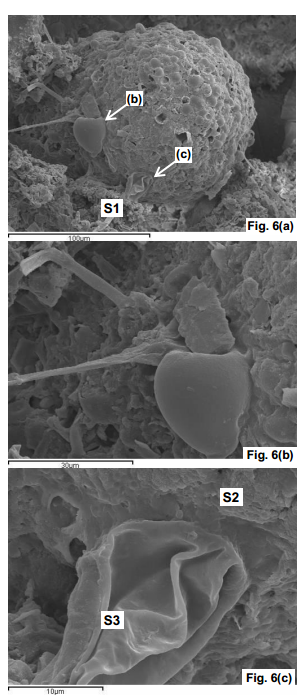
The UK researchers say that tiny algae-like fossils found in meteorite fragments that landed in Sri Lanka last year can’t have originated on our planet, according to the study published in the Journal of Science.

Although:
http://www.slate.com/blogs/bad_astronomy/2013/03/11/meteorite_life_claims_of_fossils_in_a_meteorite_are_still_wrong.html
http://www.wiley.com/WileyCDA/PressRelease/pressReleaseId-107910.html

Meteor / Asteroid Update

There has been no lack of press coverage on Meteors / Asteroids:

Two in the mainstream New Yorker
A factual update on the Russian impact from Kurzweil
And a longer essay from larouchepac...wonder if any of the other political parties are beginning to consider it an issue.

Here is an article saying a Planetary Defense System needed and may be feasible:
http://transmissionsmedia.com/planetary-defense-system-is-needed-may-be-feasible/
In the wake of an announcement made by head of Russia’s Space Agency Roskosmos Vladimir Popovkin on the need to create a planetary defense system, Izvestia interviewed several experts on the subject of its feasibility.
In the wake of an announcement made by head of Russia’s Space Agency Roskosmos Vladimir Popovkin on the need to create a planetary defense system, Izvestia interviewed several experts on the subject of its feasibility. Anatoliy Zaytsev, General Director of a non-commercial partnership with a straightforward name “Planetary Defense Center”, believes Earth needs such a system and, indeed, it’s possible to create one. Providing the Siberian meteorite as an example, the expert explains that the system will not work from the planet’s surface and needs to be space-based – he proposes deploying several satellites in key points to monitor incoming threats.
He adds that while Russia has the knowledge base and resources to create such a system, it needs to be international – a national system in theory could be used by government for ulterior purposes. With international legal issues to resolve in order to implement the idea, Zaytsev reminds that a proposal for a global natural disaster monitoring system already exists, as requested by Toni Blair ahead of the 2005 G20 summit. Another spokesman from the Russian aerospace industry who the article does not name believes it unlikely for Russia to be capable of seeing through such a complex project. Moreover, he doubts that such a system is even physically possible.***

And there has been quite a bit of news on the upcoming gathering for the PDC conference:
http://www.gmv.com/en/Company/Communication/Events/2013/04/3IAA.html
3rd IAA Planetary Defense Conference
15-19 April 2013
Arizona (USA)
On 15 and 19 April 2013, in Flagstaff, USA, the International Academy of Astronautics (IAA) will be holding the conference on the protection of our planet from impacts by asteroids and comets.
The IAA Planetary Defense Conference carries on from the four previous planetary defense conferences held in 2004 in Los Angeles, 2007 in Washington DC, 2009 in Granada, Spain and 2011 in Bucharest, Romania.
As in previous years GMV will be sponsoring the event and is also offering a money prize for the best student papers presented at the conference.

Find the PROGRAM to the PDC Conference Here (a lot on airbursts and Chelyabinsk):
http://iaaweb.org/iaa/Scientific%20Activity/pdc2013program.pdf
Also an international simulation, and UN recommendations for international response!

It is discussed in this article:
http://phys.org/wire-news/126366704/near-earth-objects-and-recent-asteroid-events-top-the-agenda-for.html

Near-Earth objects and recent asteroid events top the agenda for Planetary Defense Conference

April 2nd, 2013
The February 15 explosion of an incoming asteroid over in the Russian Urals was a unique event. No one in modern times had ever witnessed such a display of celestial fireworks, which injured more than a thousand people from flying glass. But for the past 20 years astronomers have been studying the cosmic impact hazard, so they were prepared to react quickly to investigate this remarkable event. The first scientific report on their preliminary findings will be presented on April 14 as part of an international meeting on Planetary Defense. This discussion will be free to the press and the public.
"Gathering for Impact!", the 2013 International Academy of Astronautics (IAA) Planetary Defense Conference, will be held in Flagstaff, Ariz., on April 15-19. The conference brings together world experts on subjects related to planetary defense, including what we currently know about potentially threatening asteroids and comets, techniques that might be used to deflect a threatening object, and political and policy issues that might affect a decision to take action. The conference will include an exercise where participants develop civil protection and threat mitigation responses to a hypothetical threat.
Preliminary data indicate that the Chelyabinsk projectile was about 20 meters (60 feet) in diameter, or half the diameter of the famous Tunguska impact of 1908, which leveled more than a thousand square miles of forest. Both projectiles were stony fragments of asteroids. The energy of the Chelyabinsk blast was about 500 KT, or the equivalent of 40 Hiroshima-size atom bombs. It had about a tenth of the energy, and exploded about twice as high as, the Tunguska blast, thus doing much less damage on the ground.
Since this cosmic projectile exploded in daylight over a major city, there is an abundance of videos and eyewitness accounts. The explosion was also observed from space and was detected around the world by its atmospheric pressure wave. Further, the explosion produced a shower of small stones that spread over an area at least 15 km (10 miles) across. These meteorites are an important part of the evidence for what happened.
The special session on the Chelyabinsk Event and its Implications for Planetary Defense will be held at 7:30 pm on April 14, the evening before the opening of the week-long 2013 IAA Planetary Defense Conference. The chief organizer of the special Chelyabinsk session is David Morrison of the SETI Institute in Mt. View, California. Morrison said "The explosion over Chelyabinsk was a wake-up call to the continuing threat of cosmic projectiles. We all have a long-term stake in learning about these projectiles so that someday we will have the capability to discover objects before they collide and take necessary action to prevent a disaster."
The three invited speakers and their topics are:
David Kring (Lunar and Planetary Institute, Houston): A Geologic and Meteoritic Perspective of Impact Airbursts and Insights into the Chelyabinsk Event
Peter Brown (University of Western Ontario): The Chelyabinsk Airburst: A Preliminary Overview of Observations
Mark Boslough (Sandia National Lab, Albuquerque): Computational Simulations of Chelyabinsk and Tunguska Airbursts
In addition there will be other shorter papers and a concluding panel discussing the implication of this event for future efforts to protect our planet from cosmic impacts.
The conference is being hosted on the campus of Northern Arizona University (NAU). Just a short drive away is the world famous Barringer Meteor Crater, the best preserved meteor impact site in the world. Flagstaff is also home to Lowell Observatory, where Pluto was discovered in 1930. Flagstaff is a mountain town surrounded by national forests and is close to the Grand Canyon and many other natural wonders. NAU has a high-research status, and is a leader in sustainability, science, business, green building, and cultural arts. Empowered by the Arizona Board of Regents to provide educational opportunities statewide, the university now serves approximately 25,000 students at the Flagstaff campus, offering nearly 150 combined undergraduate and graduate degree programs.

A less detailed article here:
http://washingtonexaminer.com/scientists-to-talk-planetary-defense-in-flagstaff/article/feed/2086190
http://www.newswise.com/articles/near-earth-objects-and-recent-asteroid-events-top-the-agenda-for-planetary-defense-conference
http://www.eurekalert.org/pub_releases/2013-04/nau-noa040213.php
http://news.nau.edu/near-earth-objects-asteroid-events-top-agenda-at-planetary-defense-conference/


Interestingly, the conference features two free public events (ALREADY SOLD OUT):
http://news.nau.edu/planetary-defense-conference-features-two-free-public-events-nye-to-appear/
Internationally known speaker, comedian, author, scientist and media personality Bill Nye The Science Guy, will discuss planetary defense at 7 p.m. Wednesday, April 17, at NAU’s Prochnow Auditorium.
Nye will be joined by Geoff Notkin of the Science Channel’s Meteorite Men
Two events are free and open to the public, according to David Trilling, assistant professor of astronomy at Northern Arizona University and local organizer of the conference.
At 7:30 p.m. Sunday, April 14, there will be a special pre-conference session on the Chelyabinsk (Russia) impact event of Feb. 15. On that day, a 15-meter object exploded in the atmosphere over a city of 1 million people. Several experts will discuss the impact and what scientists have learned. This free session will include ample time for questions.
Once the conference is under way, at 7 p.m. Wednesday, April 17, Planetary Society CEO Bill Nye The Science Guy will discuss planetary defense at NAU’s Prochnow auditorium. Nye, an internationally known speaker, comedian, author, scientist and media personality, will be joined by Geoff Notkin of the Science Channel’s Meteorite Men.
Tickets to the event became available this week; no seats remain, but organizers hope to secure overflow seating with a live video feed.

In fact, the fact that it sold out made news:
http://azdailysun.com/news/local/p-m-update-bill-nye-talk-on-planetary-defense-sold/article_65894796-a158-11e2-8de3-0019bb2963f4.html

2:15 p.m. update: Bill Nye talk on planetary defense sold out

NAU officials have confirmed that Bill Nye’s talk next week on planetary defense is sold out. The free tickets were gone less than a day after the event was announced.
The 800-seat Prochnow Auditorium on campus will be at capacity for the talk. Organizers are looking at a possible simulcast at another site on campus, but have not confirmed those arrangements.
The talk by Nye is one of two public presentations as part of the Planetary Defense Conference. A lead-off public presentation by a panel of scientists on last month's Russian meteor strike will take place Sunday, April 14, at 7:30 p.m. in the High Country Conference Center, and seats will be available on first-come, first served basis.
The university had initially announced the Nye talk would be in the Cline Library Auditorium, but quickly changed the location due to demand for tickets.
Officials with the Central Ticketing Office said that many people were willing to pay a $3 fee to book the tickets by phone, which contributed to how fast the tickets went. A large number of people also came into the office looking for tickets.
 From: http://www.universetoday.com/100400/nasas-kaboom-experimental-asteroid-radar-aims-tothwart-earths-kaboom/
‘KaBOOM’ – the acronym stands for ‘Ka-Band Objects Observation and Monitoring Project’ – is a new test bed demonstration radar array aimed at developing the techniques required for tracking and characterizing Near Earth Objects (NEO’s) at much further distances and far higher resolution than currently available.
“The purpose of KaBOOM is to be a ‘proof of concept’ using coherent uplink arraying of three widely spaced antennas at a high frequency; Ka band- 30 GHz,” KaBOOM Chief Scientist Geldzahler told me.
Currently the KaBOOM array consists of a trio of 12 meter wide radar antennas spaced 60 meters apart – whose installation was just completed in late February at a remote site at KSC near an alligator infested swamp.
“The KaBOOM concept is similar to that of normal phased arrays, but in this case, instead of the antenna elements being separated by ~ 1 wavelength [1 cm], they are separated by ~ 6000 wavelengths. In addition, we want to correct for the atmospheric twinkling in real time,” Geldzahler told me.
Why are big antennae’s needed?
“The reason we are using large antennas is to send more powerful radar signals to track and characterize asteroids farther out than we can today. We want to determine their size, shape, spin and surface porosity; is it a loose agglomeration of pebbles? composed of solid iron? etc.”
Such physical characterization data would be absolutely invaluable in determining the forces required for implementing an asteroid deflection strategy in case the urgent need arises.
How does KaBOOM compare with and improve upon existing NEO radars in terms of distance and resolution?
“Currently at NASA¹s Goldstone 70 meter antenna in California, we can track an object that is about 0.1 AU away [1 astronomical unit is the average distance between the Earth and the sun, 93 million miles, so 0.1 AU is ~ 9 million miles]. We would like to track objects 0.5 AU or more away, perhaps 1 AU.”
“In addition, the resolution achievable with Goldstone is at best 400 cm in the direction along the line of sight to the object. At Ka band, we should be able to reduce that to 5 cm – that’s 80 times better !”
Another significant advantage compared to Goldstone, is that the Ka radar array would be dedicated 24/7 to tracking and characterizing NEO’s and orbital debris, explained Miller.
Goldstone is only available about 2 to 3% of the time since it’s heavily involved in numerous other applications including deep space planetary missions like Curiosity, Cassini, Deep Impact, Voyager, etc.
A high power, high resolution radar system can determine the NEO orbits about 100,000 times more precisely than can be done optically.
...Now in a prescient coincidence of timing, NASA is funding an experimental asteroid radar detection array called ‘KaBOOM’ that may one day help thwart Earth’s untimely Ka-boom – and which I inspected first-hand this past week at the Kennedy Space Center (KSC),following the SpaceX Falcon 9 blastoff for the ISS. “KaBOOM takes evolutionary steps towards a revolutionary capability,” said Dr. Barry Geldzahler, KaBOOM Chief Scientist of NASA Headquarters, in an exclusive interview with Universe Today.
Read more: http://www.universetoday.com/100400/nasas-kaboom-experimental-asteroid-radar-aims-tothwart-earths-kaboom/#ixzz2QR7tUO3S

26 March 2013

Congress on Meteors & Asteroids

http://science.house.gov/hearing/full-committee-hearing-threats-space-meteors-and-comets-part-1

See archived webcast and the opening statement by Dr. Lamar Smith
http://science.house.gov/sites/republicans.science.house.gov/files/documents/HHRG-113-%20SY-WState-S000244-20130319.pdf

Statement of Chairman Lamar Smith (R-Texas)
Hearing on Space Threats: A Review of U.S. Government Efforts to Track and Mitigate Asteroids and Meteors, Part I
Chairman Smith: Good morning. Today’s hearing is on a subject important to our nation and to our world. This is the first hearing of two on Space Threats to Earth, reviewing U.S. Government efforts to track incoming asteroids and meteors.
Although many may be only aware of this subject due to recent events, it is actually one as old as our planet. This is a copy of TIME Magazine from nearly 20 years ago (1994) where this topic was featured on the cover. Though the issue has been around for a number of years, there are many questions still to be asked and answered. The range of questions are broad and complex, from how to track an object millions of miles away to how to respond if an asteroid or meteor is headed toward Earth.
The two events of Friday, February 15 - the harmless flyby of asteroid 2012 DA14 and the not so harmless impact of a meteor in Russia - are a stark reminder of the need to invest in space science. The asteroid passed just 17,000 miles from Earth, a distance less than the Earth’s circumference. Fifty years ago, we would have had no way of seeing the asteroid coming, and even so it was discovered by amateur astronomers. The U.S. has come a long way in its ability to track and characterize asteroids, meteors, comets and meteorites. But we still have a long way to go. NASA believes it has discovered 93 percent of the largest asteroids in near-Earth orbit, those one kilometer or larger.
But what about the other seven percent remaining, about 70, or even those smaller than one kilometer, estimated to be in the thousands? An asteroid as small as 100 meters could destroy an entire city upon a direct hit. Are we tracking those?The meteor that struck Russia was estimated to be 17 meters, and wasn’t tracked at all. The smaller they are, the harder they are to spot, and yet they can be life-threatening. The broad scope of our efforts include participation of governments, research institutions, industries and amateur astronomers in their backyard or on home computers.
Some space challenges require innovation, commitment and diligence. This is one of them. And this Committee will strive to continue to lead in this area. For all of the attention and publicity the two events of February 15 received, it was still too late for us to have acted to change the course of the incoming objects. We are in the same position today and for the foreseeable future unless we take actions now that improve our means of detection. Part of our discussion today is about how to achieve this in the current budget environment.
I do not believe that NASA is going to somehow defy budget gravity and get an increase when everyone else is getting cuts. But we need to find ways to prioritize NASA’s projects and squeeze as much productivity as we can out of the funds we have.
Examining and exploring ways to protect the Earth from asteroids and meteors is a priority for the American people and should be a priority for NASA. We were fortunate that the events of last month were simply an interesting coincidence rather than a catastrophe.
However, we still need to make investments and improvements in our capability to anticipate what may
occur decades from now, or tomorrow.

http://science.house.gov/press-release/smith-avoiding-asteroid-threats-requires-innovation-commitment-and-diligence

Smith: Avoiding Asteroid Threats Requires Innovation, Commitment and Diligence

Mar 19, 2013

Washington, D.C. – The House Science, Space, and Technology Committee today held a hearing titled, Threats from Space: A Review of U.S. Government Efforts to Track and Mitigate Asteroids and Meteors. The hearing is the first in a two-part series on what the U.S. is doing to track and monitor Near Earth Objects (NEO) that pose a threat to the planet. It comes one month after an asteroid passed the earth and a meteor exploded over the skies in Russia on the same day.

Chairman Smith: “The meteor that struck Russia was estimated to be 17 meters, and wasn’t tracked at all. The smaller they are, the harder they are to spot, and yet they can be life-threatening. Some space challenges require innovation, commitment and diligence. This is one of them.

“Examining and exploring ways to protect the Earth from asteroids and meteors is a priority for the American people and should be a priority for government. We were fortunate that the events of last month were simply an interesting coincidence rather than a catastrophe. And this Committee will strive to continue to lead in this area.”

On February 15, 2013, an unforeseen meteor exploded above Russia, releasing the equivalent of about 20 times the explosive energy of an atomic bomb. The blast injured nearly 1,200 people and resulted in an estimated $33 million in property damage. Until it entered our atmosphere, the Russian meteor went completely undetected. On the same day, a larger asteroid discovered by amateur astronomers and tracked closely by NASA passed safely by the Earth, but within the orbital belt of weather satellites.

Today’s hearing provided an overview of the U.S. government’s plans and programs to track, classify and mitigate the threat of NEOs. Witnesses estimated that between 13,000 and 20,000 objects exist that are over 140 meters and considered “near Earth.” Of those objects, we only have knowledge of and track around 10 percent. In order to improve on these capabilities, witnesses discussed the need for better international collaboration and more space-borne telescopes to track NEOs.

A second hearing is planned for April to address international, commercial private sector and philanthropic initiatives to survey the sky for asteroids and comets.

The following witnesses testified today:
The Honorable John P. Holdren, Director, Office of Science and Technology Policy, Executive Office of the President
Gen. William L. Shelton, Commander, U.S. Air Force Space Command
The Honorable Charles F. Bolden, Jr., Administrator, National Aeronautics and Space Administration


We’re on notice to plan for the next meteor

By Rush Holt and Donna F. Edwards,February 15, 2013
 
Rush Holt (D) is a physicist and former assistant director of the Princeton Plasma Physics Laboratory. He represents New Jersey’s 12th District in the U.S. House. Donna F. Edwards, who represents Maryland’s 4th District, is the ranking Democrat on the House subcommittee on space.
 
Ameteor broke apart over rural Russia on Friday morning, injuring at least 1,200 people. Hours later, an asteroid known as 2012 DA14 passed about 17,000 miles above Earth’s surface — a close shave in astronomical terms, passing nearer than many of our communications satellites. One was predicted; the other was not.
These events were unrelated, but they underscore how crucial it is that nations know, quickly, what is falling from the sky and what, if any, dangers are posed.
Every day about 40 tons of space debris hit the atmosphere, burn and settle to Earth, NASA has found. The vast majority of the detritus consists of meteoroids no larger than a grain of sand, but even tiny specks pack a wallop: A typical meteor hits Earth traveling at least seven miles per second, at least 30 times faster than a bullet shot from a handgun. That is why a tiny meteoroid can make such a spectacular shooting star.
According to the Russian Academy of Sciences, the meteor that disintegrated over Siberia on Friday weighed in the neighborhood of 10 tons. It was thought to be traveling at 10 to 12 miles per second when it broke apart.
Every year or so, such a meteor blazes through the sky somewhere over Earth. But every 100 years or so, Earth is hit by a meteor large enough to cause much more significant devastation. Such an impact occurred in 1908 in Tunguska, Russia, when a meteor 100 feet or so in diameter exploded in the Siberian wilderness, releasing about 1,000 times the amount of energy as the nuclear bomb dropped on Hiroshima.
And every 100 million years or so, Earth is hit by a meteor large enough to cause mass extinctions, like the one at the end of the age of dinosaurs. These threats are minuscule on a day-to-day basis, but surely any existential threat to the human race must be taken seriously.
To help get a handle on this danger, NASA coordinates the Near-Earth Object Program, which searches for and tracks asteroids and comets that could approach the earth. As of this week, about 10,000 near-Earth objects have been discovered, including nearly 900 with a diameter of roughly a kilometer or larger. None is expected to hit Earth anytime soon, but many large objects are believed to remain undetected.
In 2005 Congress set a 15-year deadline for scientists to find 90 percent of the near-Earth objects greater than about 500 feet in diameter — those large enough to cause regional or global devastation. But the mandate has been chronically underfunded. The project would require several more dedicated telescopes. Last year the project received about $20 million, far less than the $50 million that the National Research Council estimated in 2010 was needed to reach the congressional goal by 2030, a decade late. Even when this goal is met, most small asteroids and comets — too small to cause global devastation but still large enough to cause damage far worse than just occurred in Russia — will remain undetected unless funding is significantly increased.

Algae-like structures inside a Sri Lankan meteorite are clear evidence of panspermia

From: http://www.technologyreview.com/view/512381/astrobiologists-find-ancient-fossils-in-fireball-fragments/?goback=%2Emid_I471135276*416_*1
Astrobiologists Find Ancient Fossils in Fireball Fragments

Algae-like structures inside a Sri Lankan meteorite are clear evidence of panspermia, the idea that life exists throughout the universe, say astrobiologists.


On 29 December 2012, a fireball lit up the early evening skies over the Sri Lankan province of Polonnaruwa. Hot, sparkling fragments of the fireball rained down across the countryside and witnesses reported the strong odour of tar or asphalt.

Over the next few days, the local police gathered numerous examples of these stones and sent them to the Sri Lankan Medical Research Institute of the Ministry of Health in Colombo. After noticing curious features inside these stones, officials forwarded the samples to a team of astrobiologists at Cardiff University in the UK for further analysis.

The results of these tests, which the Cardiff team reveal today, are extraordinary. They say the stones contain fossilised biological structures fused into the rock matrix and that their tests clearly rule out the possibility of terrestrial contamination.

In total, Jamie Wallis at Cardiff University and a few buddies received 628 stone fragments collected from rice fields in the region. However, they were able to clearly identify only three as possible meteorites.

The general properties of these three stones immediately mark them out as unusual. One stone, for example, had a density of less than 1 gram per cubic centimetre, less than all known carbonaceous meteorites. It had a partially fused crust, good evidence of atmospheric heating, a carbon content of up to 4 per cent and contained an abundance of organic compounds with a high molecular weight, which is not unknown in meteorites. On this evidence, Wallis and co think the fireball was probably a small comet.

The most startling claims, however, are based on electron microscope images of structures within the stones (see above). Wallis and co. say that one image shows a complex, thick-walled, carbon-rich microfossil about 100 micrometres across that bares similarities with a group of largely extinct marine dinoflagellate algae.
They say another image shows well-preserved flagella that are 2 micrometres in diameter and 100 micrometres long. By terrestrial standards, that’s extremely long and thin, which Wallis and co. interpret as evidence of formation in a low-gravity, low-pressure environment.

Wallis and co. also measured the abundance of various elements in the samples to determine their origin. They say that low levels of nitrogen in particular rule out the possibility of contamination by modern organisms which would have a much higher nitrogen content. The fact that these samples are also buried within the rock matrix is further evidence, they say.

Wallis and co. are convinced that the lines of evidence they have gathered are powerful and persuasive. “This provides clear and convincing evidence that these obviously ancient remains of extinct marine algae found embedded in the Polonnaruwa meteorite are indigenous to the stones and not the result of post-arrival microbial contaminants,” they conclude.

There’s no question that a claim of this kind is likely to generate controversy. Critics have already pointed out that the stones could have been formed by lightning strikes on Earth although Wallis and co. counter by saying there was no evidence of lightning at the time of the fireball and that in any case, the stones do not bear the usual characteristics of this kind of strike. What’s more, the temperatures generated by lightning would have destroyed any biological content.

Nevertheless, extraordinary claims require extraordinary evidence and Wallis and co. will need to make their samples and evidence available to the scientific community for further study before the claims will be taken seriously.

If the paper is taken at face value, one obvious question that arises is where these samples came from. Wallis and c.o have their own ideas: “The presence of fossilized biological structures provides compelling evidence in support of the theory of cometary panspermia first proposed over thirty years ago,” they say.

This is an idea put forward by Fred Hoyle and Chandra Wickramasinghe, the latter being a member of the team who has carried out this analysis.

There are other explanations, of course. One is that the fireball was of terrestrial origin, a remnant of one of the many asteroid impacts in Earth’s history that that have ejected billions of tonnes of rock and water into space, presumably with biological material inside. Another is that the structures are not biological and have a different explanation.

Either way, considerably more work will have to be done before the claims from this team can be broadly accepted. Exciting times ahead!Ref: arxiv.org/abs/1303.1845: The Polonnaruwa Meteorite: Oxygen isotope, Crystalline and Biological Composition

Russia mulls beacons and the bomb to thwart asteroids

From: http://www.spacedaily.com/reports/Russia_mulls_beacons_and_the_bomb_to_thwart_asteroids_999.html

Russia mulls beacons and the bomb to thwart asteroids
by Staff Writers
Moscow (AFP) March 12, 2013


Russian officials on Tuesday proposed ideas ranging from planting beacon transmitters on asteroids to megaton-sized nuclear strikes to avert the threat from meteor collisions with the Earth.

Saving the world from asteroid strikes has moved out of the realm of science fiction in Russia into a political reality after a spectacular meteor explosion injured over 1,500 people in the Russian Urals in February.

The meteor strike over the Russian city of Chelyabinsk raised fears of what could happen if an even larger space body entered the earths atmosphere above an inhabited area.

Russian space agency chief Vladimir Popovkin told a special conference at the Federation Council, the Russian upper house, that Russia was closely following the asteroid Apophis that is due to come close to the Earth in 2036.
"We want to put a beacon on the asteroid Apophis to ascertain its exact orbit and work out what further actions to take with respect to the asteroids approach to the Earth in 2036," he said quoted by Russian news agencies.

NASA has already said that according to its calculations there is no danger of the asteroid colliding with the Earth.

Popovkin said that an initial state plan to combat threats from space could appear in Russia at the end of 2013 but the first real measures would only be adopted no earlier than 2018-2020.

He did not give details on the cost of the programme, although Russian news agencies said previous estimates had been around 58 billion rubles ($1.9 billion).
A senior official from Russias nuclear agency Rosatom told the same conference that taking out an asteroid with a nuclear weapon would require a bomb with a force of at least one megaton.

"Intercepting an asteroid of a span of more than one kilometre would need the use of nuclear material of the power of over a megaton," said Oleg Shubin, the deputy director of the department of nuclear munitions experiments at Rosatom.

"This is a separate scientific task that needs to be solved," he added

Shubin said that it could not be predicted well in advance when some 50 percent of asteroids and meteors in the tails of comets would be on a collision course with the earth.

He said while the probability of an asteroid collision was low it could still happen at any time.

"In the foreseeable future I cannot see any other danger that would lead - at the very least - to the disintegration of human civilisation," Shubin said.

Likely 3 Earth-like planets within 7 Light Years!


"…We now estimate that if we were to look at 10 of the nearest small stars we would find about four potentially habitable planets, give or take," said Ravi Kopparapu, a post-doctoral researcher in geosciences. "That is a conservative estimate," he added. "There could be more…."
  

…According to his findings, "The average distance to the nearest potentially habitable planet is about seven light years. That is about half the distance of previous estimates," Kopparapu said. "There are about eight cool stars within 10 light-years, so conservatively, we should expect to find about three Earth-size planets in the habitable zones."…

26 February 2013

Its Time for a Real Policy on Asteroids!

"If you think the events of the Post-Valentine surprise of the Russian Meteor and 2012 DA14 near miss are one of a kind, think again. ”We know there are 500,000 to 1 million asteroids the size of DA14 or larger. So far we have found fewer than 1% of that “cosmic hailstorm” through which we sail in our yearly orbit around the Sun,” ...

But look: Meteors raining fire down on Russia injuring hundreds of people, and the closest pass of an asteroid ever forecast and recorded (2012 DA14) as a post-Valentine’s day surprise need to be a wake up call. The longer we go without a pro-active space policy on asteroids, the more we sacrifice international leadership, hold back our industry, and reduce our chances of being able to effectively deal with the threat."

Find the full article here:http://thespacereview.com/article/2248/1
http://www.kurzweilai.net/its-time-for-a-real-policy-on-asteroids
http://americansecurityproject.org/blog/2013/its-time-for-a-real-policy-on-asteroids/
http://www.spacesolarpower.org/its-time-for-a-real-policy-on-asteroids/

16 February 2013

The Death Star is Dead; Long Live DE-("Life") Star!

[HUMOR]

Citizens for the Death Star, Take Heart: Recycle your plans!

Just last month, the Obama administration rejected calls from 34,435 of its citizens calling for the administration to "Secure resources and funding, and begin construction of a Death Star by 2016," stating that, by "focusing our defense resources into a space-superiority platform and weapon system such as a Death Star, the government can spur job creation in the fields of construction, engineering, space exploration, and more, and strengthen our national defense."

The administration rejected the proposal, partially on expense, but also based on a stated policy that the administration "does not support blowing up planets."

However, it is unclear if the administration pro-planetary rights position extends to asteroids and meteors that threaten Earth.

In light of the recent asteroid close pass, meteor strike over Russia, and Russian calls for a planetary defense system, perhaps these citizens should seek a compromise position.

Certainly, these  34,435 citizens could achieve most of their stated objectives of spurring job construction engineering and space exploration by pursuing Space-Based Solar Power (recommended by the Pentagon itself), building multi-kilometer across giant space stations which send power to Earth via Lasers or Microwaves.  Sure, the capability of lighting a planet through infinite green energy may not be as spectactular or perceived as "cool" as the capability to blow one up, but at least it is still perceived by Chinese space program pioneers such as Prof Wang Xiji as the key to global domination ("Whoever takes the lead in the development and utilization of clean and renewable energy and the space and aviation industry will be the world leader.")

Sure, you'd have to live with the fact that you are doing good instead of evil, but  at least you get the giant space station beaming gigawatts of energy.

Sure, you might not make as many enemies in the process, but at least you could join forces with most American citizens, who, when surveyed by and large favor constructing Space Solar Power Satellites to every other potential space mission (with asteroid defense being #2), and who have separately petitioned the administration to make SBSP part of our space program.

You'd have to scope your ambitions...instead of thousands of years to construct, you'd have to cope with the reality articulated by the International Academy of Astronautics IAA 2011 report that "As of 2010, the fundamental research to achieve technical feasibility for the SPS [solar-power satellites] was already accomplished. Whether it requires 5–10 years or 20–30 years to mature the technologies for economically viable SPS now depends more on the development of appropriate platform systems concepts and the availability of adequate budgets."

Sure, you'd have to bite a really big bullet, because an SBSP program is unfortunately NOT going to cost (errr..inject stimulus dollars) of $850,000 Trillion (Obama administration estimate)...since an individual multi-gigawatt Space Solar Power Satellite only cost in the tens of billions, but at least they would pay-back economically.  And of course it would only take about $10 billion and 10 years to get the first demonstration in operation, and the IAA estimated job creation in the multiple millions.

But if giant multi-gigawatt orbiting power monsters delivering infinite green energy to planet Earth is not a close enough compromise, consider this most recent proposal by the Scientists at UC Santa Barbara might just fit th

e bill! Philip M. Lubin, and Gary B. Hughes are proposing a spaced based laser system 10 kilometers in diameter (about 100 times the size of the ISS) that could deliver 1.4 megatons of energy per day to its target, taking care of a pesky little asteroid like

2012 DA14 in about an hour, or destroy asteroids 10 times larger in about a year, with evaporation starting at a distance as far away as the Sun. Sure, saving a planet isn't destroying one...but at least you get the giant space station and jobs!


From: http://www.ia.ucsb.edu/pa/display.aspx?pkey=2943

NEWS RELEASE


California Scientists Propose System to Vaporize Asteroids That Threaten Earth


February 14, 2013

Click for downloadable image Full description below. †


Click for downloadable image Full description below. ††


Click for downloadable image Full description below. †††

(Santa Barbara, Calif.) –– As an asteroid roughly half as large as a football field –– and with energy equal to a large hydrogen bomb –– readies for a fly-by of Earth on Friday, two California scientists are unveiling their proposal for a system that could eliminate a threat of this size in an hour. The same system could destroy asteroids 10 times larger than the one known as 2012 DA14 in about a year, with evaporation starting at a distance as far away as the Sun.


UC Santa Barbara physicist and professor Philip M. Lubin, and Gary B. Hughes, a researcher and professor from California Polytechnic State University, San Luis Obispo, conceived DE-STAR, or Directed Energy Solar Targeting of Asteroids an exploRation, as a realistic means of mitigating potential threats posed to the Earth by asteroids and comets.


"We have to come to grips with discussing these issues in a logical and rational way," said Lubin, who began work on DE-STAR a year ago. "We need to be proactive rather than reactive in dealing with threats. Duck and cover is not an option. We can actually do something about it and it's credible to do something. So let's begin along this path. Let's start small and work our way up. There is no need to break the bank to start."


Described as a "directed energy orbital defense system," DE-STAR is designed to harness some of the power of the sun and convert it into a massive phased array of laser beams that can destroy, or evaporate, asteroids posing a potential threat to Earth. It is equally capable of changing an asteroid's orbit –– deflecting it away from Earth, or into the Sun –– and may also prove to be a valuable tool for assessing an asteroid's composition, enabling lucrative, rare-element mining. And it's entirely based on current essential technology.


"This system is not some far-out idea from Star Trek," Hughes said. "All the components of this system pretty much exist today. Maybe not quite at the scale that we'd need –– scaling up would be the challenge –– but the basic elements are all there and ready to go. We just need to put them into a larger system to be effective, and once the system is there, it can do so many things."


The same system has a number of other uses, including aiding in planetary exploration.


In developing the proposal, Lubin and Hughes calculated the requirements and possibilities for DE-STAR systems of several sizes, ranging from a desktop device to one measuring 10 kilometers, or six miles, in diameter. Larger systems were also considered. The larger the system, the greater its capabilities.


For instance, DE-STAR 2 –– at 100 meters in diameter, about the size of the International Space Station –– "could start nudging comets or asteroids out of their orbits," Hughes said. But DE-STAR 4 –– at 10 kilometers in diameter, about 100 times the size of the ISS –– could deliver 1.4 megatons of energy per day to its target, said Lubin, obliterating an asteroid 500 meters across in one year.


The speed of interplanetary travel –– far beyond what is possible with chemical propellant rockets used today –– could be increased with this sized system, according to Lubin. It could also power advanced ion drive systems for deep space travel, he said. Able to engage multiple targets and missions at once, DE-STAR 4 "could simultaneously evaporate an asteroid, determine the composition of another, and propel a spacecraft."


Larger still, DE-STAR 6 could enable interstellar travel by functioning as a massive, orbiting power source and propulsion system for spacecraft. It could propel a 10-ton spacecraft at near the speed of light, allowing interstellar exploration to become a reality without waiting for science fiction technology such as "warp drive" to come along, Lubin said.


"Our proposal assumes a combination of baseline technology –– where we are today –– and where we almost certainly will be in the future, without asking for any miracles," he explained. "We've really tried to temper this with a realistic view of what we can do, and we approached it from that point of view. It does require very careful attention to a number of details, and it does require a will to do so, but it does not require a miracle."


Recent and rapid developments in highly efficient conversion of electrical power to light allow such a scenario now, Lubin said, when just 20 years ago it would not have been realistic to consider.


"These are not just back-of-the-envelope numbers," Hughes concurred. "They are actually based on detailed analysis, through solid calculations, justifying what is possible. And it's all available under current theory and current technology.


"There are large asteroids and comets that cross the Earth's orbit, and some very dangerous ones going to hit the Earth eventually," he added. "Many have hit in the past and many will hit in the future. We should feel compelled to do something about the risk. Realistic solutions need to be considered, and this is definitely one of those."


Three UCSB undergraduate students are assisting Lubin and Hughes with the DE-STAR project: Johanna Bible and Jesse Bublitz, both from the College of Creative Studies, and chemistry major Joshua Arriola.


(172)


[RETURN TO TOP]


† Top image: Concept drawing of the DE-STAR system engaging both an asteroid for evaporation or composition analysis, and simultaneously propelling an interplanetary spacecraft.

Courtesy Philip M. Lubin


†† Middle image: This plot shows time to evaporate an Apophis-like asteroid versus diameter of the asteroid, versus several laser power levels. The baseline DE-STAR 4 system has approximately 100 gigawatts of laser power.

Courtesy Philip M. Lubin


††† Bottom image: This plot shows DE-STAR laser power and spot diameter versus DE-STAR array size. The DE-STAR system is modular and can be built up in sections each of which is immediately operational.

Courtesy Philip M. Lubin


###

So...the Improbable DOES happen!


What an amazing and unprecedented post-Valentine's day surprise!

In the same day that the close approach of 2012 DA14, a 50 meter "city killer" class asteroid, discovered less than one year ago, came zipping by within 27,700 km of the Earth, well inside the band of communications satellites in Geosynchronous orbit, and less than 1/13th the distance to the Moon, there Siberia Russia experienced its second major meteor strike in barely 100 years, and the first-ever meteor strike in the modern era to result in human injuries. Is it wishful thinking that such events might elevate Asteroids in the public discourse and lead to some proactive policymaking?

From: http://abcnews.go.com/GMA/video/russian-city-hit-meteor-1200-people-hurt-18518828
1,200 People injured, 4,000 Buildings damaged, 1 million square feet of glass shattered
Meteor weighed more than Eiffel Tower

From: http://www.latimes.com/news/world/worldnow/la-wn-fg-chelyabinsk-meteor-lessons-20130216,0,4643856.story

"It is high time Russia should start heavily investing in building an advanced space danger monitoring and warning system and above that a system capable of destroying such super bombs falling on us from the skies."

The Chelyabinsk region has long been one of the most important military-industrial regions of Russia, where you "can’t drive a mile without passing a defense or a nuclear industry installation," the scientist said.

"We should be thankful to fate that this meteor in fact was a blessing in disguise and instead of destroying a significant part of Russia with quite dire consequences to the rest of the world, it sent us a clear warning signal by simply blowing up a bunch of windows and lightly injuring over 1,000 people," Lipunov said.

Bagrov spoke in favor of creating an early warning system of satellites monitoring space for signs of approaching danger instead of restoring a global land- and sea-based system. Lipunov argues that a space system would be more expensive and may take a decade to install -- and even then it would not be as reliable as an Earth-based system equipped with powerful telescopes.

Regional Gov. Mikhail Yurevich told reporters Saturday that the material damage to the region already exceeds $33 million. He said that 30% of about 100 square meters of broken windows had already been replaced.

The explosion damaged 3,000 residential houses, 34 hospitals and clinics and 360 schools and kindergartens, as well as several businesses. High school and university students received a day off Saturday. At least three hockey games were canceled because of damage to the local rink.
From: http://www.foxnews.com/science/2013/02/15/injuries-reported-after-meteorite-falls-in-russia-ural-mountains/
The meteor -- estimated to be about 10 tons and 49 feet wide -- entered the Earth's atmosphere at a hypersonic speed of at least 33,000 mph and shattered into pieces about 18-32 miles above the ground, the Russian Academy of Sciences said in a statement. But even small asteroids pack a tremendous punch, explained Andrew Cheng of the Johns Hopkins Applied Physics Laboratory. 
"It doesn’t take a very large object. A 10-meter size object already packs the same energy as a nuclear bomb," Cheng, who led a 2000-2001 mission for NASA to orbit and land on an asteroid, told FoxNews.com. 

"There was panic. People had no idea what was happening," said Sergey Hametov, a resident of Chelyabinsk, a city of 1 million about 930 miles east of Moscow.

The meteor hit less than a day before Asteroid 2012 DA14 is to make the closest recorded pass of an asteroid to the Earth for a rock of its size -- about 17,150 miles. But the European Space Agency said its experts had determined there was no connection -- just cosmic coincidence.
The meteor released several kilotons of energy above the region, the Russian science academy said. According to NASA, it was about 15 meters or 49 feet wide before it hit the atmosphere, about one-third the size of the passing asteroid.
Lessons had just started at Chelyabinsk schools when the meteor exploded, and officials said 258 schoolchildren were among those injured. Amateur video footage showed a teacher speaking to her class as a powerful shockwave hit the room.

The site of Friday's spectacular show is about 3,000 miles west of Tunguska, which in 1908 was the site of the largest recorded explosion of a space object plunging to Earth. That blast, attributed to a comet or asteroid fragment, is generally estimated to have been about 10 megatons; it leveled some 80 million trees.
Scientists believe that a far larger meteorite strike on what today is Mexico's Yucatan Peninsula may have been responsible for the extinction of the dinosaurs about 66 million years ago. According to that theory, the impact would have thrown up vast amounts of dust that blanketed the sky for decades and altered the climate on Earth.
The meteor could have produced much more serious problems. Chelyabinsk is an industrial town long held to be one of the world's most polluted areas, and the area around it hosts nuclear and chemical weapons disposal facilities.

Vladimir Chuprov of Greenpeace Russia said the Russian government has underestimated potential risks of the region. He noted that the meteor struck only 60 miles from the Mayak nuclear storage and disposal facility, which holds dozens of tons of weapons-grade plutonium.
A chemical weapons disposal facility at Shchuchye also contains some 6,000 tons of nerve agents, including sarin and VX, about 14 percent of the chemical weapons that Russia is committed to destroy.

Jim Green, NASA's director of planetary science, called the back-to-back celestial events an amazing display.
"This is indeed very rare and it is historic," he said on NASA TV. "These fireballs happen about once a day or so, but we just don't see them because many of them fall over the ocean or in remote areas."

Read more: http://www.foxnews.com/science/2013/02/15/injuries-reported-after-meteorite-falls-in-russia-ural-mountains/#ixzz2L5QFgH9U


04 February 2013

Feb. 15th an asteroid (2012 DA14) about half the size of a football field will fly past Earth only 17,200 miles above our planet's surface

From: http://www.spacedaily.com/reports/Record_Setting_Asteroid_Flyby_999.html


Record Setting Asteroid Flyby
by Dr. Tony Phillips for NASA Science News
Huntsville AL (SPX) Feb 01, 2013

Talk about a close shave. On Feb. 15th an asteroid about half the size of a football field will fly past Earth only 17,200 miles above our planet's surface. There's no danger of a collision, but the space rock, designated 2012 DA14, has NASA's attention.

"This is a record-setting close approach," says Don Yeomans of NASA's Near Earth Object Program at JPL. "Since regular sky surveys began in the 1990s, we've never seen an object this big get so close to Earth."

Earth's neighborhood is littered with asteroids of all shapes and sizes, ranging from fragments smaller than beach balls to mountainous rocks many kilometers wide. Many of these objects hail from the asteroid belt, while others may be corpses of long-dead, burnt out comets. NASA's Near-Earth Object Program helps find and keep track of them, especially the ones that come close to our planet.

2012 DA14 is a fairly typical near-Earth asteroid. It measures some 50 meters wide, neither very large nor very small, and is probably made of stone, as opposed to metal or ice. Yeomans estimates that an asteroid like 2012 DA14 flies past Earth, on average, every 40 years, yet actually strikes our planet only every 1200 years or so.

The impact of a 50-meter asteroid is not cataclysmic--unless you happen to be underneath it. Yeomans points out that a similar-sized object formed the mile wide Meteor Crater in Arizona when it struck about 50,000 years ago. "That asteroid was made of iron," he says, "which made it an especially potent impactor." Also, in 1908, something about the size of 2012 DA14 exploded in the atmosphere above Siberia, leveling hundreds of square miles of forest. Researchers are still studying the "Tunguska Event" for clues to the impacting object.

"2012 DA14 will definitely not hit Earth," emphasizes Yeomans. "The orbit of the asteroid is known well enough to rule out an impact."

Even so, it will come interestingly close. NASA radars will be monitoring the space rock as it approaches Earth closer than many man-made satellites. Yeomans says the asteroid will thread the gap between low-Earth orbit, where the ISS and many Earth observation satellites are located, and the higher belt of geosynchronous satellites, which provide weather data and telecommunications.

"The odds of an impact with a satellite are extremely remote," he says. Almost nothing orbits where DA14 will pass the Earth.

NASA's Goldstone radar in the Mojave Desert is scheduled to ping 2012 DA14 almost every day from Feb. 16th through 20th. The echoes will not only pinpoint the orbit of the asteroid, allowing researchers to better predict future encounters, but also reveal physical characteristics such as size, spin, and reflectivity. A key outcome of the observing campaign will be a 3D radar map showing the space rock from all sides.

During the hours around closest approach, the asteroid will brighten until it resembles a star of 8th magnitude. Theoretically, that's an easy target for backyard telescopes. The problem, points out Yeomans, is speed. "The asteroid will be racing across the sky, moving almost a full degree (or twice the width of a full Moon) every minute. That's going to be hard to track." Only the most experienced amateur astronomers are likely to succeed.

Those who do might experience a tiny chill when they look at their images. That really was a close shave.

For more information about 2012 DA and other asteroids of interest, visit NASA's Near-Earth Object Program web site: http://neo.jpl.nasa.gov